

The Lakers Ownership Transition has been more than a business headline in Los Angeles. For a franchise that sits at the center of the city’s pro sports identity, the shift raised practical questions for fans: who sets the tone, how access is handled, and whether basketball operations will feel different inside a team built on star power, pressure, and constant public attention.
On June 25, 2025, the Buss family formally agreed to sell a majority stake in the Lakers to Mark Walter of TWG Global, with Jeanie Buss remaining as team governor Westlaw report. The NBA Board of Governors unanimously approved the sale on October 30, 2025 NBA approval. Those two dates gave the handoff official shape and gave Lakers followers a clearer frame for what had changed and what had not.
As of September 21, 2026, the research notes for this story also include an August 12, 2026 report of a later agreement involving Bob Iger and Joshua Kushner to buy majority ownership from Walter. Because the approved source set here confirms the Walter transaction and NBA approval, that later reported agreement is treated as reported, not as a completed league-approved transfer. That distinction matters for readers trying to separate confirmed franchise control from reported next steps.
Lakers Ownership Transition Timeline
Why Lakers Ownership Transition Felt Personal
In Los Angeles, ownership is not a distant corporate detail. Lakers fans grew up connecting the franchise to the Buss family’s run, championship expectations, familiar courtside scenes, and a belief that the team should be both local institution and global draw. Any transfer of majority control was bound to land with emotion, even if Jeanie Buss stayed in the governor’s seat.
The key point is continuity mixed with change. Walter’s approved purchase shifted majority ownership, but Jeanie’s continued governor status kept a known basketball voice attached to the franchise. That balance likely mattered inside the building as much as outside it. Players, coaches, agents, sponsors, and season-ticket holders all read ownership changes for signals. A familiar governor can slow panic. A new majority owner can still change investment priorities, staffing, and the pace of business decisions.
What The Confirmed Sale Did And Did Not Decide
The sale approval did not, by itself, dictate a roster move, coaching change, ticket plan, or arena policy. It did confirm that a new majority stakeholder had been accepted by the league. For a team followed daily across Southern California, that is still significant. The Lakers operate with little quiet space. Every front-office adjustment or spending decision can be read through the ownership lens.
That is why the Lakers Ownership Transition should be understood in layers. The first layer was legal and league approval. The second was public trust: would fans feel the team still carried its family-led identity? The third was basketball practice: would the front office receive new resources, new expectations, or new reporting lines?
Fan Engagement Questions Across Los Angeles
Access, Affordability, And Trust
Lakers home games are not just events for tourists and celebrities. They are family nights, company outings, youth basketball rewards, alumni gatherings, and neighborhood rituals for fans who plan around traffic, parking, school schedules, and work shifts. So any ownership change brings one immediate question: will ordinary local fans feel closer to the team or priced farther away?
The research notes include discussion of possible ticketing changes after the later reported Iger-Kushner agreement, including broker-held season tickets and single-game pricing. Those items are not treated here as official policy because the approved source set does not confirm them. Still, the concern behind them is real. Fan engagement is not only social media reach or brand growth. It is whether a parent in the San Fernando Valley, a student in Long Beach, or a youth coach in Inglewood can see a path into the building without feeling locked out.
For the Lakers, that challenge is sharp because scarcity is part of the product. Demand is high, the arena is central to LA sports culture, and the team’s name carries premium pricing pressure. New ownership can protect community ties by keeping communication clear: what is changing, what is not, and how local fans fit into the plan.
Local Identity In A Global Brand
The Lakers are global, but they are also deeply local. Their fan base includes families that have followed the team across generations, high school players modeling footwork after franchise stars, and community leagues where purple and gold gear shows up on weekend mornings. That local connection cannot be replaced by broader brand ambition.
This is where the Lakers Ownership Transition becomes a fan-engagement test. A new ownership structure can bring sharper business planning and wider international reach, but Los Angeles supporters will judge it by the touchpoints they feel: ticket access, in-arena experience, community events, youth clinics, local partnerships, and how openly the franchise communicates during hard stretches.
Coverage of team performance still matters, of course. Readers tracking how late-game choices shape public mood can pair this ownership story with our Lakers postgame coverage, where team decisions are viewed through the pressure of live competition.
Team Dynamics Inside A High-Pressure Franchise
Stability Around The Basketball Group
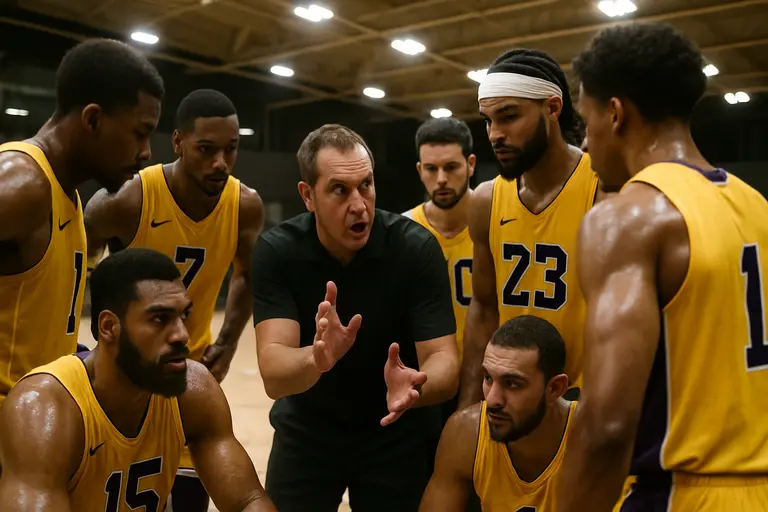
Ownership shifts can affect team dynamics even when the roster does not change overnight. Coaches want clarity. Front-office staff want defined authority. Players want to know whether the club is committed to winning, development, and professional support. In a market like Los Angeles, uncertainty can spread fast because every move is amplified.
Jeanie Buss remaining as governor after the 2025 transaction created a bridge between the prior ownership structure and Walter’s majority stake. That bridge may have helped keep the franchise from feeling like it had been handed to strangers. For a team with championship standards, continuity in leadership voice can help steady the room while new decision-makers assess the business and basketball sides.
At the same time, new majority control often brings new evaluation. That does not mean rash roster action. It can mean clearer performance benchmarks, deeper spending reviews, added support staff, or different communication rhythms between ownership and basketball operations. The Lakers’ challenge is to make those changes without creating noise that distracts from practice, player development, and game preparation.
How Players And Coaches May Feel The Shift
Players usually experience ownership change indirectly. They notice facility investment, travel standards, staffing, recovery resources, and how the organization reacts after losses. Coaches notice whether resources match expectations. If the public message is championship-level ambition, the internal support has to match that message.
The Lakers Ownership Transition also affects accountability. In Los Angeles, team dynamics are shaped by stars, rotation roles, media pressure, and the constant comparison to past title teams. A changed ownership structure can either calm that pressure through steady decision-making or sharpen it if goals are unclear. The best version for the locker room is not loud. It is consistent.
- For fans: clarity on access, pricing, and community events will matter as much as brand messaging.
- For players: resources, routine, and trust in basketball leadership will shape daily experience.
- For coaches: stable communication from ownership can reduce outside noise during difficult stretches.
- For Los Angeles: the franchise’s local presence remains central, even as its business reach grows.
What Lakers Ownership Transition Means In Los Angeles
The Lakers Ownership Transition left the franchise with a familiar public figure in Jeanie Buss and a new majority ownership structure approved by the NBA in 2025. That combination is why the story continues to matter locally. It is not only about valuation or boardroom control. It is about whether fans in LA feel the team’s future still includes them, and whether the basketball operation gains steadiness rather than distraction.
For now, the confirmed record shows a completed 2025 sale process from the Buss family to Walter, with league approval that October. The later reported 2026 agreement involving Iger and Kushner adds another layer, but without the same approved-source confirmation in this article, it should be followed carefully rather than treated as settled league action.
The next measure is practical. Fans will look for transparency. Coaches and players will look for support. Local communities will look for signs that the Lakers still see Los Angeles as more than a market. If the ownership group can honor the franchise’s identity while improving the day-to-day operation, the transition will be judged less by headlines and more by how the team feels on game nights, in the locker room, and across the city’s basketball circles.