

The Palisades Recreation Center rebuild moved from plan to construction on September 15, 2026, when city and community leaders held the official groundbreaking in Pacific Palisades. For a neighborhood still measuring what was lost in the Palisades Fire of January 7, 2025, the ceremony carried a clear sports meaning: the local courts, fields and gathering spaces that help children learn games and families build routines are on the path back.
The project at 851 Alma Real Drive is not a small repair job. Research provided for the rebuild places the cost at more than $50 million, funded through philanthropic donations rather than taxpayer dollars, and identifies the effort as the largest public-private partnership in the history of the Los Angeles Department of Recreation and Parks. The September 15 ceremony included leaders and groups tied to the rebuild, including Mayor Karen Bass, Steadfast LA, LA Strong Sports and JJ Redick, according to the reported groundbreaking account from Travel Today LA.
Palisades Recreation Center Rebuild Sets A Sports Baseline
Why The Groundbreaking Mattered Locally
The groundbreaking mattered because the site has long served as more than a park address. Recreation centers are where youth teams get their first practice slots, where volunteer coaches introduce fundamentals, and where older residents stay tied to the neighborhood through low-barrier activity. After the January 7, 2025 fire severely affected the property, the rebuild became part of the community’s sports recovery as much as its civic recovery.
The updated plan calls for a facility of about 28,000 square feet, replacing two previous gyms that combined for about 18,000 square feet. That extra indoor footprint is significant for local sports scheduling. More indoor space can help separate activities by age group, reduce pressure when weather or daylight limits outdoor use, and give basketball and pickleball a clearer home inside the same neighborhood facility.
What The New Indoor Space Adds
The planned indoor program includes two basketball courts and two pickleball courts, along with an enlarged lobby, community rooms and gathering spaces. For youth basketball, two courts can affect how practices are assigned, how clinics are staged and how weekend programming is organized. For pickleball, indoor courts are valuable because they give adult players and mixed-age groups a dependable site when outdoor courts are full or conditions are poor.
That mix also matters for families with athletes in different stages of development. A younger player may need an introductory clinic, a middle-school athlete may need organized practice time, and a parent or grandparent may want recreational play. The planned building gives the neighborhood a chance to keep those uses close together rather than scattering them across separate sites.
Outdoor Fields, Courts And Gathering Space
A Soccer Field Sized For Younger Players
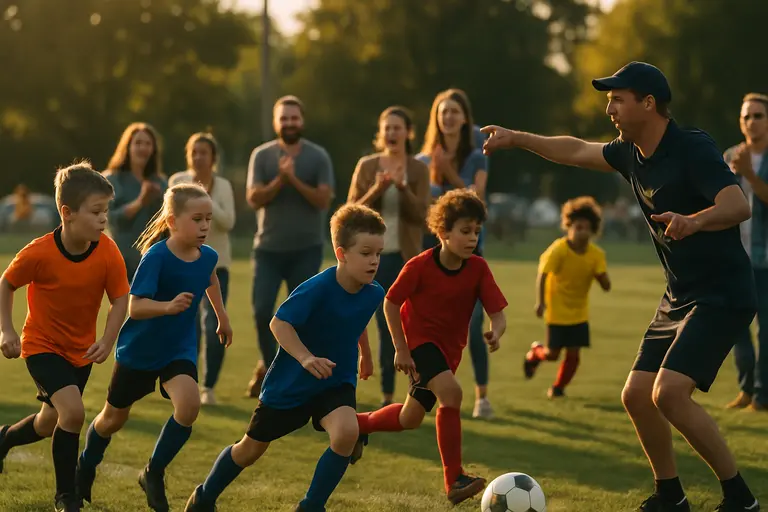
The outdoor plan includes a U10-size soccer field measuring 105 feet by 165 feet. That detail is important because field size shapes how young players learn spacing, passing angles and team shape. A field built for younger age groups can support development without forcing children into an adult-sized layout before they are ready.
Outdoor upgrades are also expected to include two lighted basketball courts, bocce courts, terraced seating, a two-level hillside playground, a revitalized Veterans Garden and a central gathering space called the Pali Hub. For game-day operations at the neighborhood level, seating, pathways and gathering areas matter almost as much as the playing surface. Families need places to wait between games, coaches need predictable entry points, and small tournaments need enough surrounding space to keep foot traffic from crowding the field or court.
How Shared Space Supports Team Culture
The planned central gathering area gives the rebuild a sports identity beyond individual games. Community sports depend on informal moments: players meeting before practice, parents comparing schedules, coaches checking in with league organizers and younger siblings watching older athletes compete. Those moments are not listed on a scoreboard, but they shape whether a recreation center feels like a home court.
The master plan reviewed by the Los Angeles Board of Recreation and Park Commissioners describes an approximately 11-acre project area, with parking improvements, upgraded pathways, a community kiosk, landscaping work, tree preservation and enhancement, and a new library building of about 3,300 square feet in the broader project scope city master plan. For sports families, those site details affect drop-off timing, accessibility and the ability to move safely between activities.
What The Timeline Means For Local Athletes
Practice Planning During Construction
The rebuild is expected to take 14 to 16 months from the September 2026 groundbreaking, placing likely completion in late 2027 to early 2028. That means coaches, families and league organizers still face an interim period. Practice locations, court availability and youth programming may continue to require flexibility while construction proceeds.
For high school athletes, travel teams and younger recreation players, temporary displacement can affect rhythm. A player’s development often depends on repetition: the same gym, the same weekly time slot, the same teammates showing up after school. While the research does not provide a temporary programming schedule, the stated construction window gives families a rough planning frame as they consider transportation, school calendars and club commitments.
Philanthropy And Public Recreation
The funding model also stands out. The research states that more than $50 million in project cost is being covered through philanthropic donations, with no taxpayer money used. Earlier reporting placed the budget around $40 million, but updated figures cited in the research now put the cost above $50 million. That shift reflects the scale of the planned work, from indoor courts to outdoor spaces and site systems.
The coalition named in the research includes the City of Los Angeles Department of Recreation and Parks, Steadfast LA, LA Strong Sports, Gensler, SWA Group, Freeman Group, Latham & Watkins and local advisory board input. For a sports community, the key question is how those pieces turn into usable time on courts and fields once construction ends. Design quality matters, but the real test will be whether young players, adult leagues and neighborhood programs can secure dependable access.
Community Sports Impact In Pacific Palisades
Why Multi-Use Facilities Matter
The Palisades Recreation Center plan reflects a practical reality in Los Angeles neighborhoods: recreation sites must serve many sports, many ages and many schedules. Basketball, pickleball, soccer and bocce do not use the same space in the same way, yet each sport can bring residents into the facility on different days and at different hours.
That range helps keep a recreation center active beyond one league or one season. A youth soccer field may be busiest after school and on weekends. Indoor basketball courts can serve clinics, practices and open play. Pickleball and bocce can draw adults who might not otherwise use a traditional gym. A site with several sports options has a better chance to support daily activity rather than a few isolated event windows.
- Two planned indoor basketball courts can support youth practices, clinics and community play.
- Two planned indoor pickleball courts can serve adult and mixed-age recreation.
- A U10-size soccer field can provide an age-appropriate development space for younger players.
- Lighted outdoor basketball courts can extend usable hours when permitted and scheduled.
- Gathering areas and terraced seating can improve the experience for families and coaches.
A Local Venue With Regional Lessons
Los Angeles has many neighborhoods where athletic demand runs ahead of available public space. The Palisades Recreation Center rebuild offers one example of how a damaged site can be rebuilt with youth development, adult recreation and community access in the same plan. The project is local in address, but the questions it raises are familiar across the region: Who gets court time? How are youth leagues balanced with adult play? How do families reach the facility safely? How do public sites stay welcoming after major investment?
Those questions will not be answered by the groundbreaking alone. They will be answered through scheduling policies, maintenance, programming and the daily habits of the people who use the space after it opens. Still, the September 15, 2026 ceremony marked a firm step toward restoring a sports anchor in Pacific Palisades.
Why Palisades Recreation Center Matters For Local Sports
The Palisades Recreation Center matters because local sports need dependable places before they can build strong teams. Talent development does not begin with headlines. It begins with a child having a court nearby, a coach having a safe place to run drills, and a family knowing where to gather after school or on a weekend morning.
As of September 28, 2026, the project had already broken ground and remained in the construction phase. The supported timeline points to completion in late 2027 to early 2028. Until then, the most grounded view is both hopeful and realistic: Pacific Palisades has taken a major step toward replacing what was lost, but the full sports impact will be measured when athletes return to the courts, fields and shared spaces built for them.