

The Lakers Ownership Change moved from one major handoff to another in less than a year, and that pace mattered in Los Angeles because the Lakers are not just another pro team. They are part of family routines, youth basketball dreams, neighborhood debates, and the city’s sports identity. By October 15, 2026, two major ownership steps had already taken place: Mark Walter’s approved majority stake in 2025, then the August 2026 agreement involving Bob Iger and Joshua Kushner. For fans, the biggest question was not only who held the financial control. It was whether the Lakers could keep the Buss-era feel while adjusting to a higher-price, higher-pressure sports business model.
Lakers Ownership Change And The Buss Link
The first major shift came on October 30, 2025, when the NBA Board of Governors unanimously approved Mark Walter’s acquisition of a majority stake in the Lakers from the Buss family, with the franchise valued at $10 billion, according to the NBA announcement. That approval marked a major change in control, but it did not remove Jeanie Buss from the front of the franchise’s leadership structure.
Why Lakers Ownership Change Felt Different
The Lakers Ownership Change felt different from a standard franchise sale because the Buss name stayed connected to the team’s public face. Jeanie Buss was confirmed to remain team governor for at least five years following Walter’s takeover. For Los Angeles fans, that detail carried weight. The Lakers’ identity has long been tied to visible ownership, star management, and the expectation that the franchise should compete at the highest level while still understanding the city around it.
That continuity helped soften what could have felt like a clean break. Fans who grew up with the Lakers as a family-run franchise had reason to see the 2025 sale as a structural change rather than a cultural reset. Walter gained majority control, but the day-to-day meaning for supporters was less dramatic because the team governor position stayed familiar.
What The 2025 Approval Signaled
The $10 billion valuation showed how far elite sports franchises had moved as business assets. For a local fan base, that number could feel distant from the court. Still, it shaped the environment around the team. Higher valuations can increase pressure on revenue, premium experiences, sponsorship growth, and media strategy. Those business goals can affect how fans experience game nights, how the team markets itself, and how patient leadership remains during basketball transitions.
The Iger And Kushner Deal Raised The Stakes
The second ownership step came quickly. On August 12, 2026, Bob Iger and Joshua Kushner agreed to buy a majority stake in the Lakers from Walter in a deal valuing the team at $12.5 billion, according to the Los Angeles Times report. That meant the franchise’s reported value rose sharply after the 2025 transaction, and it placed the Lakers at the center of a wider conversation about the price of major sports teams.
Jeanie Buss Remained A Stabilizing Figure
The August 2026 agreement also kept Jeanie Buss in place as governor of the Lakers for at least five more years. That part of the deal mattered as much as the headline valuation for many fans. It suggested that Iger and Kushner were not taking over with an immediate public break from the Buss family’s leadership model. Instead, the new setup kept a bridge between old and new control.
For local fans, that bridge was practical. The Lakers’ front office, community presence, and public voice all matter in Los Angeles because the team is measured daily by supporters, media, former players, and younger athletes across Southern California. Continuity at the governor level gave the franchise a familiar reference point while majority ownership moved again.
Why The Timing Mattered In Los Angeles
The timing mattered because back-to-back ownership events can create uncertainty even when leadership says familiar figures remain in place. The Walter approval in October 2025 and the Iger-Kushner agreement in August 2026 gave fans two separate moments to assess the same question: would the Lakers operate like a basketball-first institution or a fast-rising global asset?
The answer was not fully visible by October 15, 2026. What was clear was that the franchise had entered a phase where competitive decisions and business planning were closely linked. Supporters could reasonably watch how resources were directed, how basketball leadership was supported, and whether the fan experience changed under new financial expectations.
What Lakers Ownership Change Means For Fans
The Lakers Ownership Change did not immediately erase familiar leadership, but it did place fans in a new era of expectations. A $12.5 billion valuation changes the way every decision is read. Ticket access, arena experience, local broadcasts, merchandise strategy, community programs, and international branding can all become part of the same conversation.
Game-Day Access And Fan Trust
Los Angeles fans care about winning, but they also care about access. Families who plan around games, local workers who build routines around broadcasts, and younger players who see the Lakers as the city’s basketball standard all feel ownership changes through practical details. If prices rise or fan access feels narrower, the ownership shift becomes personal. If investment improves the experience without pushing long-time supporters away, the new era has a better chance to earn trust.
That is why communication matters. The Lakers do not need to explain every business decision in public, but fans respond when leadership shows that local loyalty still counts. The same audience that follows championship ambitions also notices whether the franchise keeps its community connection across Los Angeles.
Community Identity Beyond The Roster
For high school and college players in Southern California, the Lakers serve as a visible basketball ceiling. Ownership does not run a fast break or defend the rim, but it can shape the standard around facilities, player support, youth outreach, and the public image of the sport in the region. The most meaningful local impact will be seen in whether the franchise keeps investing in the city around the team, not only in the brand around the world.
That is also where fans may compare this move with other local ownership stories. The questions around continuity, spending priorities, and public trust are similar to the issues raised in our earlier look at the Lakers ownership transition, especially for supporters trying to separate business headlines from basketball meaning.
Team Direction After The Ownership Shift
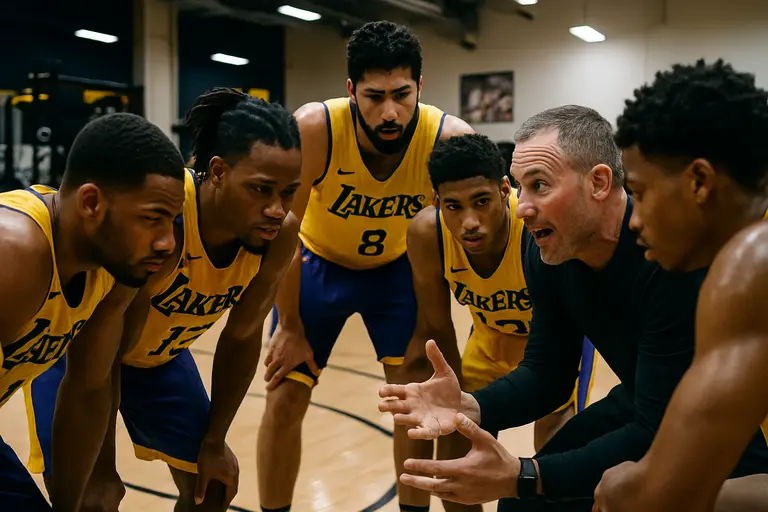
The basketball side remains the standard by which most fans will judge the new arrangement. The Lakers Ownership Change created a new power structure, but the court will still decide whether supporters feel confident. In Los Angeles, ownership patience is often tested by roster construction, player development, coaching support, and the willingness to spend wisely around a clear plan.
Basketball Decisions Will Define The Era
The Lakers’ direction after the 2026 agreement could not be judged only by the purchase price. Fans will look for evidence that basketball voices have support and that decisions are made with competitive balance in mind. Star power has always been part of the Lakers’ identity, but depth, development, and roster fit matter just as much during periods of change.
That is where new ownership faces a local credibility test. Los Angeles fans are used to big names, but they also recognize when a roster lacks balance. A successful ownership group must understand that the Lakers brand grows strongest when the basketball plan is steady. Expensive control of the franchise does not replace scouting value, coaching alignment, or smart roster management.
What Fans Can Fairly Watch
Fans can fairly judge the new structure by a few visible signs, even without knowing private ownership discussions:
- Whether Jeanie Buss remains a clear and active public leader as governor.
- Whether basketball leadership receives stable support rather than short-term pressure.
- Whether local fans still feel included as the franchise grows its business reach.
- Whether spending and strategy match a clear competitive plan.
Those measures are more useful than guessing about private motives. The confirmed facts showed a majority-stake transfer to Walter in 2025, followed by an agreement for Iger and Kushner to buy a majority stake in 2026. The rest will be judged through actions.
Why Lakers Ownership Change Matters In LA
The Lakers Ownership Change mattered because it touched both the business of sports and the emotional center of Los Angeles basketball. The Buss family’s continued presence through Jeanie Buss gave fans a line of continuity. The Iger and Kushner agreement raised the financial stakes. Together, those facts created a new chapter that will be measured by trust, access, and competitive direction.
For local supporters, the key issue is not whether the Lakers can remain famous. That part is secure. The real test is whether new majority ownership can protect what made the franchise feel local while managing the demands that come with a $12.5 billion valuation. If the Lakers keep the fan base close, support smart basketball decisions, and respect the city’s connection to the team, the ownership shift can feel less like a handoff away from the past and more like a carefully watched continuation.