

On June 30, 2026, the Lakers Leadership Transition stopped being a talking point and became the franchise’s new reality. LeBron James informed the Lakers he would not re-sign in free agency, ending an eight-year run in Los Angeles, according to a Los Angeles Times report. For a city used to measuring the Lakers through championship banners, superstar arrivals and national attention, the shift asked a local question first: who would set the tone after the most recognizable player of his generation left the building?
The answer was not one player. The Lakers moved toward a shared structure around Luka Dončić, Austin Reaves and Walker Kessler, while Rob Pelinka and JJ Redick adjusted the basketball plan. The front office changed, the business side changed and the roster changed. That makes this less of a farewell story and more of a full organizational reset, one that Los Angeles fans can judge nightly through spacing, defensive habits, bench use and late-game decision-making.
What Lakers Leadership Transition Changed First
A Clean Break From The LeBron James Era
LeBron’s exit forced the Lakers to stop building around a singular veteran centerpiece. During his time in Los Angeles, every roster decision carried the weight of maximizing a closing title window. After June 30, 2026, the team’s timeline shifted toward a younger core with different needs. Dončić brought the offensive gravity. Reaves brought continuity, shot creation and a local fan connection built over several seasons. Kessler brought the center profile the team had identified as a priority.
Reaves’ place in that group became formal on July 12, 2026, when the Lakers re-signed him to a four-year, $185 million contract. That deal followed a 2025-26 season in which he averaged 23.3 points, 5.5 assists and 4.7 rebounds per game while missing time because of injury. His scoring average was a personal best, and the research notes identify it as the best scoring average by an undrafted player since Moses Malone. For Los Angeles, that changed how Reaves should be discussed: not just as a success story, but as a paid decision-maker inside a post-LeBron offense.
Lakers Leadership Transition In The Front Office
The Lakers also reshaped the people and processes around the roster. The basketball staff added more than 15 new hires, including assistant general managers tied to scouting, analytics and player development. The research notes also point to a rebuilt player-development arm, new equipment and expanded scouting operations. Those details matter because the post-LeBron plan depends on more than three names at the top of the rotation. It depends on whether Los Angeles can find, teach and keep useful players around high-salary anchors.
The Lakers Leadership Transition also reached business operations. Lon Rosen was hired as president of business operations, Michael Spetner became chief strategy and growth officer, and Ryan Kantor became vice president of global partnerships. At least 15 business-side employees were laid off in late May 2026 as part of those changes, according to the research notes. Then, on August 12, 2026, Josh Kushner and Bob Iger agreed to purchase a majority stake from Mark Walter in a deal valuing the Lakers at $12.5 billion, with Jeanie Buss remaining team governor for at least five years. For more local context on that ownership shift, our earlier piece on the Lakers ownership transition tracked what it meant for fans across Los Angeles.
Kessler, Reaves And A Different Floor
Walker Kessler Changes The Defensive Math
The clearest basketball addition was Kessler. On July 1, 2026, the Lakers acquired him from the Utah Jazz in a sign-and-trade and signed him to a four-year, $130 million deal, according to an Associated Press report via The Washington Post. The team identified him as its franchise center, a label that carries a specific defensive expectation in Los Angeles. He was not added to mimic LeBron-era small-ball lineups. He was added to protect the rim, stabilize the paint and reduce the need for constant perimeter switching.
That shift changes the job description for the guards and wings. If Kessler can anchor deeper defensive coverages, the Lakers can ask their perimeter players to fight through screens, stay attached and trust the back line. That matters for Reaves, Dončić and the new supporting cast because it can protect energy across an 82-game schedule. It also gives Redick a clearer identity: less improvisation, more structure, and a defense built from the rim outward.
Reaves Moves From Development Story To Decision-Maker
Reaves’ promotion in status may be the most personal part of the reset for many Southern California fans. He arrived as an undrafted player and became a high-usage scorer trusted enough to receive a four-year, $185 million deal. In the post-LeBron setup, that contract says the Lakers expect him to carry more than scoring. He must help organize possessions, punish defensive attention on Dončić and keep second-unit groups steady when the lead creator sits.
| Move | Date | Strategic Meaning |
|---|---|---|
| Austin Reaves re-signed | July 12, 2026 | Confirmed him as a core guard after a career-best scoring season |
| Walker Kessler acquired | July 1, 2026 | Gave the Lakers a rim-protecting center on a four-year deal |
| Quentin Grimes signed | 2026 offseason | Added wing depth on a four-year, $60 million contract |
| Sandro Mamukelashvili signed | 2026 offseason | Added frontcourt skill on a four-year, $52 million contract |
| Collin Sexton signed | 2026 offseason | Added guard scoring on a two-year, $19 million contract |
The Grimes, Mamukelashvili and Sexton signings gave the Lakers more than name value. They created a bench and matchup plan that did not depend on LeBron solving late-clock problems. That is a major change in responsibility. The Lakers no longer have the same safety valve, so possessions need to be cleaner before the final seconds.
Why Local Lakers Fans Should Read This As Strategy, Not Sentiment
The Rotation Has To Earn Trust Quickly
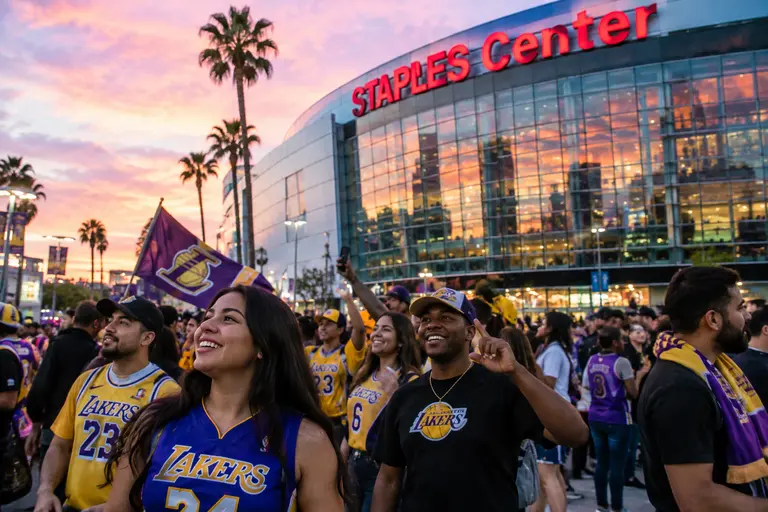
Los Angeles fans do not separate emotion from evaluation, and that is fair. LeBron’s exit closed an era that brought massive attention to the franchise. Still, the practical question is whether the new group can build trust through repeatable basketball. Dončić, Reaves and Kessler give the Lakers three different starting points: creation, continuity and protection. Redick’s task is to make those parts feel connected without asking one player to cover every flaw.
That is where bench depth matters. Grimes, Mamukelashvili and Sexton were signed to fill real rotation needs, not just to complete a roster sheet. The Lakers’ less switch-heavy defensive plan also raises the importance of communication, screen defense and rebounding discipline. If those habits hold, the team can have a more stable floor than a star-heavy roster that needs late heroics every night.
The Business Side Reached The Basketball Side
The ownership and business changes are not separate from the product fans see. A majority-stake agreement valued at $12.5 billion placed the Lakers in a new financial and strategic chapter while keeping Jeanie Buss in the governor’s seat for at least five years. That continuity matters locally because the Buss name remains tied to how many fans understand the franchise. At the same time, new business leadership and staff changes signaled that the organization was not treating the post-LeBron period as a light edit.
For a team with the Lakers’ reach, that has consequences across Los Angeles sports culture. The franchise is still judged in living rooms, gyms, bars and youth basketball circles across the region. If the new player-development work pays off, the Lakers can become less dependent on headline signings. If it does not, the pressure will return to the front office fast.
Why Lakers Leadership Transition Defines L.A. Now
Accountability Moves To The New Core
For Los Angeles, the Lakers Leadership Transition is about accountability. Pelinka built the roster. Redick has to shape the style. Dončić, Reaves and Kessler have to turn paper balance into nightly function. The early 2026-27 schedule arrived with the first Lakers team without LeBron since 2017-18, so every possession now carries a comparison to what came before, even if the new group should be judged on its own terms.
The better local read is not whether the Lakers replaced LeBron. No one on the roster carries the same career profile or cultural weight. The better read is whether the team created a basketball structure strong enough to survive without him. That means a clearer defensive base, a paid and trusted Reaves, a rim anchor in Kessler, and an organization that changed its staff and ownership structure during the same period. That is why the Lakers Leadership Transition will define this chapter in L.A. sports: it is not one departure, but a full test of how the Lakers choose to lead after it.