

The final game on September 26, 2024, against the Texas Rangers was more than a game. It felt like saying goodbye to a beloved landmark. The Oakland Coliseum history came to an end, leaving us with a harsh reality of sports relocation.
This famous baseball venue was the heart of the community for years. While owners talked about moving to Sacramento, fans knew the real cost. They felt the loss deeply.
It’s easy to see this as just business. But the Bay Area sports culture is rooted in memories that last forever. Losing the stadium means losing a part of our identity. The silence when the gates closed was deafening. It showed how little the league values history.
Statewide winners by Offense/Defense/ST
The final game at the Coliseum felt like a wake for a dying era. Fans came to mourn, not just watch baseball. It was a civic funeral for a team that had already moved on. This moment in Oakland Coliseum history shows how sports are tied to real estate.
Ticket prices for that game were outrageous. It was a study in human behavior, where fans bought nostalgia packages at high prices. The team made money off fans’ sadness as they watched the A’s relocation happen.
What were fans really buying? They paid to say they were there when the Coliseum’s lights went out. It was a mix of sadness and the harsh reality of sports economics.
The scoreboard at the Coliseum tracked more than just the game. It counted the end of a city-team relationship. It was a lesson in turning a goodbye into a way to make money.
Section winners and honorable mentions
Winning in Oakland baseball means more than just the score. It’s about the heart of the city. The Bay Area sports culture was shaped in parking lots and the Coliseum’s bleachers.
The real heroes are the fans, neighborhoods, and athletes. They played for something bigger than just a team. This stadium legacy is about raw passion, not fancy suites.
Some figures made the Coliseum a place of hope. They didn’t just play; they showed the East Bay’s spirit:
- Rickey Henderson: His energy electrified every game.
- Dave Stewart: His intensity matched the city’s grit.
- The Oakland Fans: They stayed loyal through tough times.
But, the current situation is tough. Losing a third team in five years is hard to swallow.
This tough time in Bay Area sports culture shows how fragile a stadium legacy can be. The teams may leave, but Oakland’s impact stays. It shows a city that deserved more.
Film-room clips: why the play worked
Analyzing the final moments at the Coliseum shows why it was a special baseball venue. It was more than games; it was a lesson in how timing and setting make a place unforgettable. This turned a simple ballpark into a symbol of shared memories.
The final Oakland homestand was dramatic, like a play. Film-room clips show the Yankees and Rangers were the perfect opponents. They added history and made every pitch more meaningful.
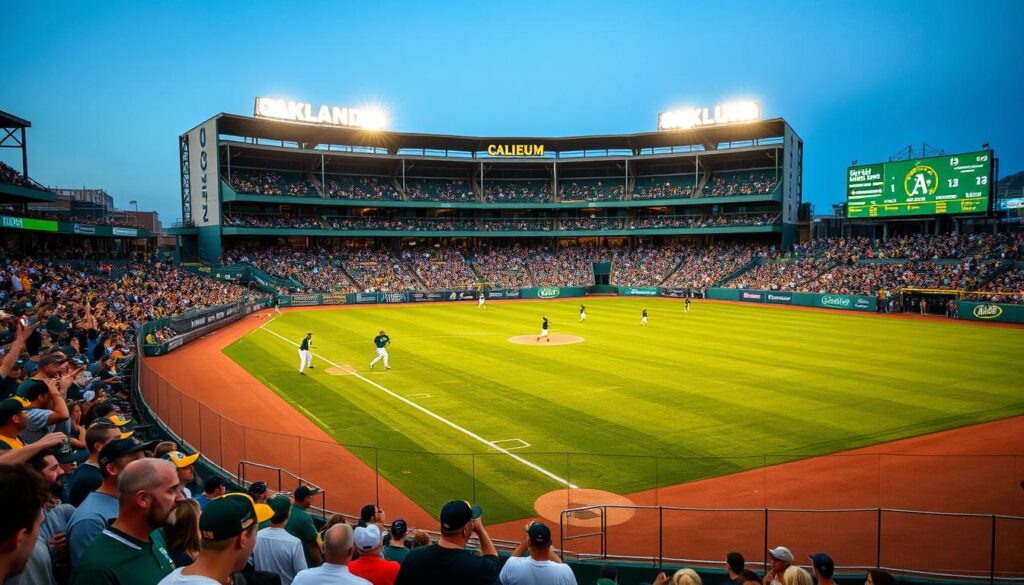
The game ended at 12:37 p.m. on September 26, 2024. This timing made the game feel different. The bright afternoon sun made the moment even more real.
Several things made this baseball venue special during its last days:
- Opponent pedigree: The famous teams kept the focus on the game.
- Ceremonial timing: The daytime start made the scene stark and clear.
- Emotional resonance: Fans saw every play as a final moment.
In the end, the mix of ceremony and setting made the stadium a memorable end to a story. It showed that a baseball venue is more than just a place. It’s a stage for our stories about time, loss, and love for the game.
Unsung heroes
Forget the headlines about relocation; the true story of Bay Area sports culture is being written by the people who refuse to leave. While ownership groups treat franchises like disposable assets, the local community has decided that their identity is not for sale. It is a fascinating metamorphosis that no boardroom memo could ever predict.
The exhaustion following the A’s departure saga was palpable, yet it served as a catalyst for something far more organic. Instead of mourning, fans are pivoting toward entities that actually value their presence. We are witnessing a shift where the power dynamic moves from corporate boardrooms back to the bleachers.
Emerging teams like the Oakland Ballers, the Roots, the Soul, and the Spiders are capturing the imagination of a city that feels betrayed by big-league politics. These organizations operate with a level of community energy that corporate marketing departments simply cannot manufacture. They understand that a team is only as strong as the bond it shares with its neighborhood.
This evolution proves that Bay Area sports culture is not disappearing; it is merely changing shape. The following table highlights the entities currently redefining what it means to support a local team.
| Team Name | Primary Focus | Community Impact |
|---|---|---|
| Oakland Ballers | Independent Baseball | High |
| Oakland Roots/Soul | Soccer/Community | Very High |
| Oakland Spiders | Ultimate Frisbee | Moderate |
Ultimately, the true heroes are the organizers and fans who keep the lights on when the giants walk away. They are proving that sports are not just about the logo on the jersey, but about the shared experience of the people in the stands.
Player of the Week: OL/DL and two-way standouts
Baseball is a game of inches, and Sutter Health Park is a game of big changes. We usually focus on players, but this week, we look at the big changes in baseball venues. It’s like a two-way game where the stakes are much higher than just numbers.
Sacramento is now in the spotlight, joining the major league talk. It’s a big move for a city wanting to show it’s worth on a national level. Hosting the Athletics brings cultural and economic benefits.
The old baseball venue in Oakland faces a tough reality. It’s losing the team that made it alive for years. Without its team, it risks becoming just a empty shell.
This change shows a hard truth about baseball venues today. It’s not just about the field; it’s about the bond between a community and its team. Whether this move is a success or not, the tactical implications are clear.
Underclassmen spotlight and recruiting notes
Scouting teenagers is tough, but figuring out the A’s relocation is even harder. It’s like a game of musical chairs, but the stakes are huge. The chairs are stadiums worth billions, and the music is made of money questions and local politics.
The team has promised to stay in Sacramento for at least three years. They might even have a fourth year option. This is a temporary home while they plan for a new stadium in Las Vegas by 2028. It’s a big dream, but it needs more than just pretty pictures to come true.
This situation is full of uncertainty and hope for the future. The team is trying to change its whole identity. For more on this, check out our 2025 moves overview.
The A’s relocation is a lesson in business strategy. It’s a risk that could pay off with a new stadium in Nevada. Or it might hit roadblocks. We’ll keep an eye on how this affects the team’s future.
How to nominate a player
Why should boardrooms decide who gets remembered? The real heart of the game beats in the stands. Official franchise milestones often miss the grit and local passion that define a true stadium legacy. It’s time to change this by letting you nominate the figures who shaped our community.
It could be a standout athlete, a dedicated coach, or a community member who kept the spirit alive. Your input is key. We aim to highlight those whose contributions are often overlooked by corporate suits. History is not just a collection of box scores; it’s the memories of everyone who passed through the gates.
By nominating someone, you help us create a more accurate stadium legacy. We seek stories that capture the true spirit of Oakland baseball. As the city pushes for an expansion team, who should be remembered?
To take part, send us a brief story about your nominee and why they’re important to our local sports identity. We’ll review these to make sure no hero is forgotten. Your voice is the essential bridge between our past and future.
Preserving our stadium legacy needs more than just nostalgia; it needs fan participation. By documenting these contributions, we keep the game’s soul alive, no matter what the front office decides. Let’s ensure the record shows the people who made this city a baseball town.
Watch list for next week
The Coliseum Complex is quiet now, but it’s not calm. AASEG plans to change this with a big investment. They will buy out city and team shares for 230 million dollars. This move will change the area’s map.
We follow the A’s relocation timeline closely. When a team leaves, it changes the local vibe. But it doesn’t kill the love for sports. Local talent always finds a way to keep the spirit alive.
Bay Area sports culture is strong and never fades. It keeps going even when the stadium is dark. We see this in every game, every victory.
Look out for the next week’s games. The new stars are ready to shine. They don’t care about business deals. They just want to win.
Share your favorite plays from upcoming games. Who will stand out under pressure? We’re eager to hear your picks for the next big performance.