

The Kings Preseason Game that opened Sacramento’s five-game tune-up on October 5, 2026, at Golden 1 Center was no longer an upcoming date by October 19. It had already become the first public checkpoint for a Kings roster that entered camp with familiar veterans, new additions, and a draft class that local fans had reason to track closely.
That timing matters. Preseason stories can age fast, and Sacramento’s schedule had fully wrapped by October 16, 2026. Without verified box scores, minute logs, or postgame quotes in the supplied source set, the safest read is not to pretend the games are still ahead or to invent what happened possession by possession. The better local angle is roster meaning: who Sacramento brought back, who it added, and why those moves shaped the questions around the October slate.
What The Kings Preseason Game Revealed
Kings Preseason Game Context In Sacramento
Sacramento announced its 2026-27 preseason schedule on July 20, 2026. The slate opened on October 5 at Golden 1 Center against the Los Angeles Lakers, then continued October 8 at the Lakers, October 10 at the Warriors, October 13 at home against the Trail Blazers, and October 16 on the road against San Antonio, according to the Kings’ team announcement. That gave Sacramento two home dates and three road tests before the regular-season build moved forward.
The structure was useful for Sacramento because it mixed regional pressure with travel. A home opener against the Lakers brought immediate attention at Golden 1 Center. The trip to Los Angeles two days later gave the staff another look at the same opponent in a different setting. The Bay Area stop against Golden State kept the preseason anchored in Northern California before the Kings returned home for Portland and closed in San Antonio.
The Kings Preseason Game against the Lakers was not just a calendar item. For local fans, it marked the first arena-level look at how Sacramento’s reworked roster carried itself after a summer of movement. Preseason results can be noisy, but lineup combinations, defensive assignments, and ball-handling duties often tell supporters which players are being asked to take on more responsibility.
What Was Knowable From Public Sources
The public facts available here are schedule and transaction based. That means the cleanest analysis starts with what Sacramento placed on the calendar and who appeared on the roster path going into those games. It does not include verified final scores, shot charts, injury updates, or coach comments from the October 5 opener. Any claim beyond the supplied research would risk adding detail that has not been verified in this source set.
Even with that limit, the schedule still told a clear story. Sacramento used the first half of October to test itself against Western Conference opponents with different travel demands. Golden 1 Center served as the first and fourth preseason stop, while Los Angeles, San Francisco, and San Antonio made the Kings operate outside their home routine. That mix gave coaches a practical sample of preparation, recovery, and bench communication before games began to count.
Roster Changes Around The Kings Preseason Game
Veteran Reset After Summer Moves
The roster context around the Kings Preseason Game was shaped by several personnel moves. CBS Sports’ transactions log lists Kings moves for the 2026-27 cycle, including the September 4, 2026, signing of Ben Simmons and summer activity involving returning players such as Daeqwon Plowden. The research also identified Precious Achiuwa’s July 7, 2026, two-year agreement as part of Sacramento’s effort to keep useful frontcourt depth in place.
Those additions and returns mattered because Sacramento’s roster was not built around a single preseason question. Simmons brought a veteran presence with size and passing ability. Achiuwa gave the frontcourt a physical option who could fit different bench groupings. Plowden’s return, noted in the research as a standard contract move, added continuity on the wing. In preseason, that kind of roster mix gives a coaching staff more combinations to inspect without asking rookies to solve every issue at once.
The research notes also listed major departures, including DeMar DeRozan being waived in early July 2026 and Russell Westbrook retiring in August 2026. Those changes, if viewed strictly through roster construction, help explain why Sacramento’s preseason carried a developmental feel. Losing established names shifts attention toward younger players, new voices, and veterans who can steady the group during camp.
Rookie Responsibility In October
Sacramento’s rookie group was central to the preseason conversation. The research identified Darius Acuff Jr. as the No. 7 overall pick, Alex Karaban as the No. 29 pick acquired through a trade with Cleveland, and Emanuel Sharp as the No. 45 pick. That is a wide draft spread: a lottery guard, a late first-round forward, and a second-round guard all entering the same camp with different expectations.
For Acuff, the local question was less about instant stardom and more about control. A young guard taken that high is usually judged early by pace, decision-making, and how quickly he recognizes NBA spacing. Karaban’s path had a different feel. As a late first-round addition, his preseason value likely came from showing where he could fit without dominating the ball. Sharp, as a second-round guard, had a more direct camp-style challenge: make simple plays, defend with purpose, and prove he belonged in competitive minutes.
Because the verified source set does not include rotation charts from the completed games, it would be wrong to claim how many minutes each rookie received or which lineups worked best. Still, the reason fans watched those October dates was clear. Sacramento’s younger players were not just filling camp seats. They were part of the plan to absorb responsibility after a summer of change.
Why The Preseason Mattered Locally
Golden 1 Center As The First Read
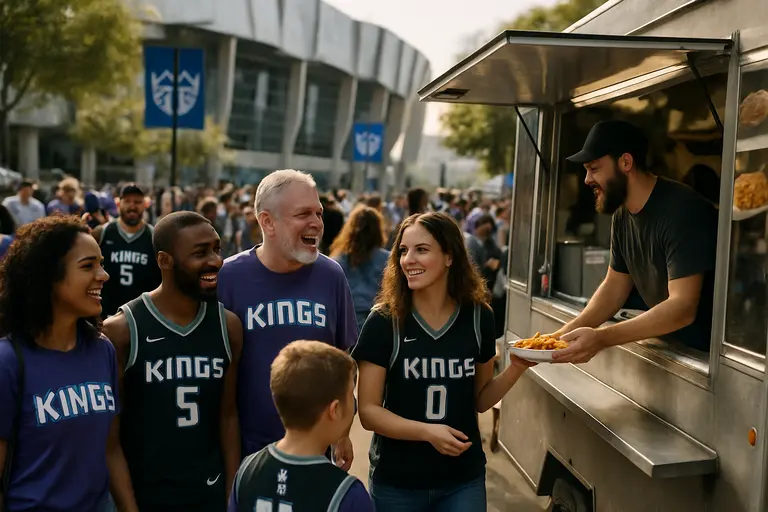
Golden 1 Center gives Sacramento preseason basketball a different feel than a neutral training environment. The October 5 home opener allowed Kings fans to see the roster before regular-season pressure hardened the rotation. That matters in a city where the pro team holds a central place in the local sports calendar, especially for families, youth players, and high school athletes who study NBA habits up close.
The location also matters for downtown Sacramento. A preseason date may not carry playoff-level stakes, but it still brings game-night patterns back into the city: arena arrivals, restaurant traffic, and the return of basketball conversation around the building. For a team trying to reset parts of its identity, that first public appearance can shape the tone of fan discussion for weeks.
Broadcast And Fan Planning Value
Sacramento’s official schedule release also included broadcast-team information, giving local viewers a familiar framework for following the October games. For readers tracking that side of the preseason, our related piece on how the Kings broadcast team stayed in place offers more detail on the viewing side of the slate.
That piece of the puzzle should not be overlooked. Preseason is where many fans learn names, numbers, and roles before regular-season routines settle in. A steady local broadcast helps explain new lineups, reminds viewers of transaction timing, and gives context for players fighting for minutes. For Sacramento supporters who could not attend at Golden 1 Center, that familiarity helped make roster evaluation easier.
What Sacramento Can Take From The Kings Preseason Game
The best read on the completed October slate is that Sacramento used the preseason to sort out roles after a summer with meaningful movement. The Kings Preseason Game that began the schedule on October 5 sat at the front of a short but useful evaluation window. The Kings faced the Lakers twice, saw the Warriors on the road, returned home for Portland, and finished in San Antonio.
For the local fan base, the main takeaway is not a prediction. It is a clearer checklist. How much playmaking can Simmons provide? How often can Achiuwa anchor practical frontcourt minutes? Which rookie looks ready for a defined early role? Can returning depth pieces keep the floor stable when the rotation stretches?
Sacramento did not need preseason to answer every question by October 19, 2026. It needed those games to identify which questions were real. The Kings’ roster changes gave the month its tension, and the schedule gave the city its first look at how that new mix might fit. That is why the preseason opener remains worth revisiting even after the final exhibition game has already passed.