

As of Nov. 3, 2026, Treynor Cleeland has become one of the central figures in UC Davis football’s 2026 season, not because his story is finished, but because his first extended run as the Aggies’ starting quarterback has already changed the way local fans evaluate the team. The sophomore quarterback from Vancouver, Washington, is listed at 6-2 and 225 pounds on the UC Davis roster, and he began the 2026 season as the starter for a program trying to stay in the Big Sky race while developing a young passer in real time.
The late-October snapshot placed UC Davis at 5-4 in all games and 3-3 in Big Sky play, with the season still active on Nov. 3, 2026. That record does not tell the full story of the Aggies’ quarterback room, but it gives the proper frame: UC Davis has had enough winning stretches to stay relevant, enough rough edges to keep the coaching staff searching for cleaner execution, and enough quarterback production to give the Davis community a reason to track each possession closely.
Treynor Cleeland And The 2026 UC Davis Offense
Treynor Cleeland By The Numbers
Through late October, the statistical profile was clear enough to separate promise from guesswork. CBS Sports listed Cleeland at 182 completions on 301 passing attempts, with a completion rate around 60.5 percent, 2,246 passing yards, 18 touchdown passes, and 7 interceptions on its UC Davis team stats. For a young quarterback handling a starting workload in the Big Sky, those numbers show more than volume. They show that UC Davis trusted him to drive the passing game, push the ball often, and absorb the week-to-week pressure that comes with being the offense’s most visible player.
His rushing line tells a different part of the story. The research notes credit him with 55 rushing attempts for 33 net yards and one rushing touchdown. That is not the profile of a quarterback who wins primarily by breaking contain or piling up designed-run yardage. Instead, the Aggies’ offense has leaned on his arm, his timing, and his ability to make enough throws to keep defenses honest. Sacks and short-yardage situations can press down a quarterback’s rushing average, so the net number should not be read as a simple measure of mobility. It does, however, show that his biggest effect has come through the air.
What His Usage Says About Trust
What makes Treynor Cleeland especially relevant to UC Davis is the amount of responsibility he has carried while still early in his college career. More than 300 pass attempts before November is not a small sample. It reflects an offense willing to put the ball in his hands, even as the team worked through conference results that left little room for wasted drives.
For local fans, that matters. UC Davis is not just developing a quarterback for future depth; it has been asking him to win games now. That tension sits at the center of the Aggies’ season. Young quarterbacks often bring uneven stretches, but they also bring the kind of growth curve that can energize a program, especially when production arrives early enough to affect the standings.
The Games That Framed UC Davis’ Quarterback Story
San Diego Set The Early Marker
Cleeland’s most eye-catching performance came on Sept. 5, 2026, against San Diego. In a 49-17 UC Davis win, he completed 22 of 31 passes for 294 yards and five touchdowns. That outing mattered because it gave the Aggies an early offensive ceiling to point toward. Five touchdown passes in a road victory did more than pad a stat line; it showed what the offense could look like when timing, protection, route spacing, and quarterback confidence lined up.
For a Davis fan base watching a new starter settle in, that game offered a clear sign that the Aggies could be more than a cautious, ball-control team. It also raised the bar for every game after it. Once a quarterback shows he can produce at that level, the analysis shifts. The question is no longer whether he can handle a college start. The question becomes how often the offense can recreate the conditions that allowed that kind of efficiency.
Stetson And Northern Colorado Added Context
On Sept. 19, 2026, against Stetson, Cleeland threw for a career-high 331 yards and two touchdowns in a 45-7 victory. That game gave the Aggies a different kind of data point. The San Diego performance showed touchdown efficiency; the Stetson win showed yardage volume. Together, those two September results gave UC Davis a working model for what its passing game could provide against overmatched defenses.
The late-October win over Northern Colorado, a 33-6 result, carried a conference angle. Cleeland threw two touchdown passes in that game, helping UC Davis pair offensive control with a dominant team performance. In a Big Sky race where each league result can shift momentum, that type of win matters locally because it keeps the conversation tied to postseason math and not just individual development.
What His Background Adds To The Aggies
From Jesuit High To Davis
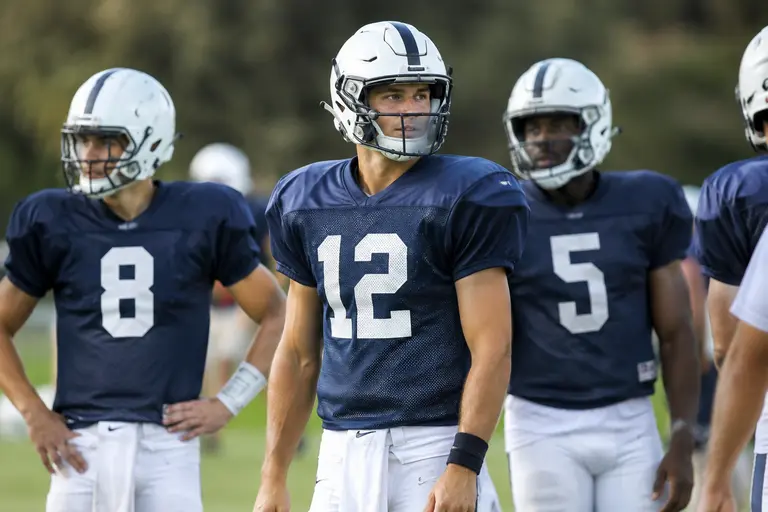
Before arriving at UC Davis, Cleeland was a three-star recruit from Jesuit High School in Portland, Oregon. His senior-season production included 1,029 passing yards, 204 rushing yards, and 1,233 total yards, with an average of 154.1 yards per game. Those figures help explain why the Aggies saw enough in his profile to build toward a meaningful college role. He was not presented in the research as a finished product out of high school; he was a quarterback with size, production, and a background that suggested room to grow.
There is also a family football layer. His father, Cameron Cleeland, played tight end at Washington and spent eight years in the NFL. His mother, Mindy, played basketball and softball at Washington, and his brother, Roice, plays college football at Washington. That context should not be used to assume outcomes, but it does help explain the competitive setting around him. He arrived at UC Davis with firsthand exposure to college athletics and the demands that come with it.
The Jerry Rice Award Watch List Signal
On Oct. 26, 2026, Cleeland was named to the Jerry Rice Award watch list, which honors the top freshman player in NCAA FCS. The research notes clarify the eligibility point: although UC Davis lists him as a sophomore, he qualifies as a redshirt freshman for the award. That distinction is common in college football, but it matters here because it places his production beside younger FCS players rather than only against more experienced starting quarterbacks.
For UC Davis, the recognition does not change the standings. It does, however, mark his season as one being noticed beyond local circles. That kind of attention can help a program’s recruiting pitch, especially for quarterbacks and skill players who want evidence that Davis will give young talent meaningful snaps if they earn them.
Why Treynor Cleeland Matters To UC Davis Football
A Local Program Building Around Proof
The Aggies’ 2026 season has not been a clean climb, but it has produced real evidence at quarterback. Treynor Cleeland remains a young starter with areas to sharpen, including consistency across league play and the balance between aggressive throws and ball security. Yet the production through late October has given UC Davis a stable reference point as it measures where the offense stands.
That is why his season matters in Davis and across Northern California’s college football circles. UC Davis has been building a public case as a serious FCS program, and quarterback play often shapes how far that case travels. The same program conversation has already reached broader questions about ambition and identity, including our earlier look at UC Davis football and the FBS question.
For now, the fairest read is grounded and sports-first: UC Davis found a quarterback who has produced enough to win games, earned national FCS watch-list attention, and kept the Aggies’ offense credible through a demanding Big Sky schedule. His next steps will be measured snap by snap, but the 2026 season has already given the Davis community a clear reason to pay close attention to the position.