

Warriors roster changes tell us plenty about Golden State’s 2026-27 plan before the first regular-season box score has a chance to shape the mood in San Francisco. The franchise did not tear down its core. It re-signed veterans, added experience, kept a full standard roster intact by late August, and placed a heavy developmental spotlight on Yaxel Lendeborg and Brandin Podziemski. For Bay Area fans, that means the season’s early questions are not just about names on paper. They are about availability, trust, and whether Chase Center can feel steadier than it did during a 37-45 finish in 2025-26.
Why Warriors roster changes Matter At Chase Center
Warriors roster changes And The Veteran Bet
The Warriors’ summer leaned toward continuity with targeted veteran support. Golden State re-signed Kristaps Porziņģis to a multi-year contract extension on June 30, 2026, then signed Al Horford to a multi-year deal on July 6, 2026, according to the team transaction log at Basketball-Reference. Later in July, the Warriors re-signed Draymond Green, De’Anthony Melton, and Gary Payton II. In late August, Georges Niang, Brandon Williams, and Dalen Terry were added across three straight dates from August 25 through August 27.
That sequence reads like a front office trying to create enough structure around Stephen Curry, Porziņģis, and Green without pretending that the 2025-26 season gave them a clean sample. Curry and Porziņģis had limited joint playing time in 2025-26, and the research notes say that injuries kept the core from building much on-court rhythm. As someone who has watched Warriors seasons swing on chemistry as much as talent, I see that as the heart of the Bay Area conversation. This roster is not short on recognizable players. The harder question is whether the combinations can hold up long enough for roles to stop shifting every week.
The July and August work also gives Steve Kerr’s staff more ways to handle the grind. Horford brings a veteran frontcourt presence. Niang adds shooting and positional size. Payton gives the Warriors a familiar defensive tool. Melton, when available, fits the guard-depth profile the Warriors have valued for years. None of those moves carries the drama of a full reset, but that is exactly the point. Golden State’s front office chose reinforcement over reinvention.
Departures Changed The Back End
The departures were quieter but still relevant. Pat Spencer left in free agency and signed a two-way deal with Phoenix on July 3, 2026. Quinten Post departed on July 8, 2026, and joined Memphis. Nate Williams signed overseas in Japan on July 17, 2026. Second-round pick Lajae Jones remained unsigned and later signed with an Italian club on September 21, 2026. Those exits did not strip the top of the rotation, but they did narrow some of the developmental side lanes that can matter across an 82-game schedule.
For local fans, the back end of a Warriors roster has always carried a different kind of intrigue. Santa Cruz call-ups, two-way experiments, and late-rotation finds have helped keep long seasons alive. The August additions suggest Golden State wanted more NBA-ready cover rather than leaving too many minutes to uncertainty. That can make practices sharper, but it can also tighten the path for younger players who need real court time.
Development Pressure Around The Young Core
Lendeborg Gives The Staff A New Test
Yaxel Lendeborg is the cleanest developmental storyline. Drafted 11th overall in 2026, he was named NBA Summer League MVP, and the league’s Pacific Division offseason recap placed him among the key Warriors additions entering the season NBA offseason recap. The words “Summer League MVP” can lift expectations fast around here, especially in a market that remembers how quickly young Warriors can become part of the larger conversation.
The more useful question is not whether Lendeborg can flash. It is whether he can earn high-minute rotation trust while playing next to veterans with very specific habits. Green sees the floor one step early. Curry bends defenses without needing to dominate the ball every trip. Porziņģis changes spacing and rim pressure when healthy. A rookie walking into that mix has to learn timing, not just plays.
That is where the Warriors’ player development staff faces its clearest challenge. If Lendeborg is asked to help right away, the team needs a role that is demanding without being overloaded. Defensive positioning, rebounding traffic, quick decisions on the short roll, and knowing when not to chase offense may decide how quickly he stays on the floor. Summer League production opened the door. NBA regular-season trust is a different test.
Podziemski’s Next Step Is No Longer A Side Story
Brandin Podziemski also sits near the center of the development picture. The research notes list him as entering his third year after averaging 13.8 points per game in 2025-26, appearing in all 82 regular-season games, scoring 1,133 total points, and making 153 three-pointers. Those totals placed him second to Curry on the Warriors in points and threes. He also had his first 20-point game on March 2, 2026, then reached 20-plus points in about half of his remaining games.
That late-season rise matters because the Warriors need creation that does not always run through Curry. Podziemski’s value comes from pace, confidence, rebounding for his position, and a willingness to play through contact. The next step is consistency against scouting reports. Opponents will sit on his tendencies more often. He will need to punish that with faster decisions and cleaner off-ball movement.
There is a local emotional piece here, too. Warriors fans have been asked to hold two timelines in their heads for years: the Curry-era urgency and the search for younger players who can extend relevance. Podziemski is no longer just a promising name. He is one of the players who can make the bridge feel real.
Health Shapes The Rotation Math
Butler And Moody Affect The Opening Months
Health is the one topic that can make every roster plan feel conditional. Jimmy Butler III suffered a season-ending ACL injury on January 19, 2026, and the research notes say he will miss at least the opening months of the 2026-27 season. Moses Moody is also rehabbing and expected to miss the start. That immediately changes what the Warriors can ask from their wings and secondary creators.
Even with a full 15-man standard roster as of August 26, 2026, availability is not the same as roster count. The Warriors can list enough names, but Kerr’s staff still has to solve who closes quarters, who guards top wings, and who supplies force when Curry rests. In that sense, Warriors roster changes are only half the story. The other half is how quickly injured players return and how much the new pieces can cover while they are out.
Bay Area fans know this tension well. A roster can feel deep in August and thin by November if injuries cluster in the same position group. That is why the Horford, Niang, Williams, and Terry additions are not just depth-chart decoration. They are insurance against the kind of early-season strain that can turn one absence into three lineup problems.
What The Rotation Could Emphasize
Without projecting exact lineups beyond the research, the roster direction points toward a few priorities: more veteran frontcourt stability, more guard depth, and a stronger developmental runway for Lendeborg and Podziemski. If Curry, Porziņģis, and Green share the floor more often than they did in 2025-26, the Warriors should have a clearer identity. If injuries linger, the team may need its younger players to grow in public, which can be both uncomfortable and valuable.
- Porziņģis and Horford give Golden State veteran frontcourt options with different spacing and defensive uses.
- Green’s one-year return keeps a familiar defensive organizer in place.
- Lendeborg’s Summer League performance raises the stakes for his first NBA role.
- Podziemski’s 2025-26 production makes him central to the next wave of Warriors scoring support.
For more context on how preseason health and rotation updates shape the Chase Center picture, our recent look at Warriors preseason player updates fits naturally with this roster discussion.
Bay Area Stakes Beyond The Depth Chart
Why This Roster Feels Local
The Warriors finished 10th in the Western Conference in 2025-26 and lost in the Play-In Tournament. That result still sits in the background for a fan base that measures the franchise against a high internal standard. The question is not whether Golden State can create interest. Chase Center will have attention. The question is whether the season can create belief that lasts beyond a good week or a hot shooting night.
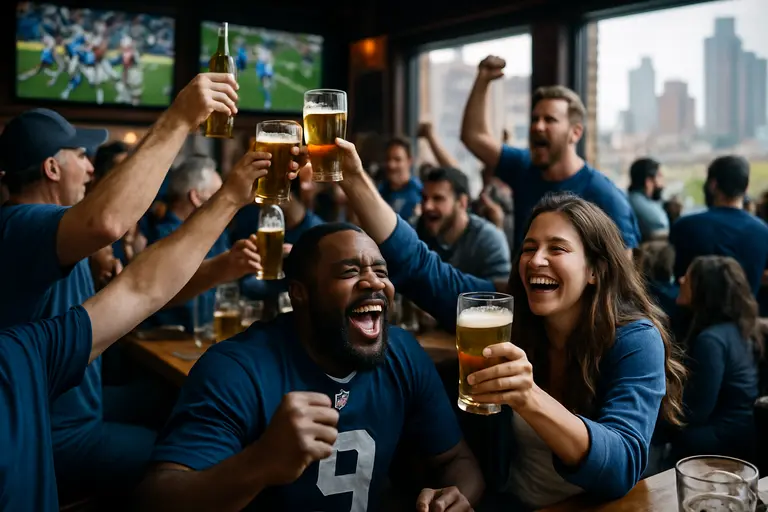
That is why Warriors roster changes feel bigger than transaction dates. They shape commute-night decisions from the East Bay, group texts in Daly City, and lunch-break debates downtown. In this region, the Warriors are not just a television product. They are part of how people mark winter, how families plan arena nights, and how local bars and restaurants feel the pulse of a winning stretch.
The luxury-tax note in the research also matters as a signal, not a full financial breakdown. Golden State entering 2026-27 under the luxury tax with a projected salary cap around US$165 million points to a front office trying to balance ambition and flexibility. The team added experience, but it did not take the shape of a reckless spending push. For a franchise that has lived through high payroll pressure, that balance is worth watching.
What Warriors roster changes Mean For The Bay
A Season Built On Trust And Patience
Warriors roster changes entering 2026-27 point toward a team trying to stay competitive while asking development and health to carry real weight. Porziņģis staying, Horford arriving, Green returning, and the late-August depth additions give the roster a veteran frame. Lendeborg and Podziemski give it a future-facing pulse. Butler’s ACL recovery and Moody’s rehab keep the early months from feeling settled.
My read from the Bay is simple: this is a season that will test patience before it rewards certainty. If the older core gets enough shared minutes, Golden State can look far more coherent than it did during the 37-45 finish. If Lendeborg earns trust faster than most rookies and Podziemski’s late 2025-26 scoring surge carries over, the rotation can feel fresher without abandoning the Curry-era identity.
For fans, that makes the first stretch less about instant judgment and more about reading signs. Are the veterans healthy enough to create rhythm? Are the young players getting real responsibility? Are the new role players shrinking the gaps that hurt the Warriors last season? Those answers will define whether this roster feels like a holding pattern or a meaningful reset of habits, roles, and belief around Chase Center.