

The Angels Sale announced on September 1, 2026, did more than put a $4 billion valuation on a Southern California baseball club. It reopened questions that Orange County families, Los Angeles baseball fans, local officials, youth coaches, and longtime season-ticket holders have been asking for years: What should the Angels be on the field, where should the franchise place its civic identity, and how should Angel Stadium fit into Anaheim’s sports future?
Stan Kroenke, through Kroenke Sports & Entertainment, agreed to purchase a majority stake in the Los Angeles Angels from Arte Moreno, according to MLB’s report on the agreement. Moreno’s 23-year run as owner, which began in 2003, would shift into a minority stake once the transaction closes. For fans who have seen division titles, star power, roster frustration, and stadium debate all packed into that period, the announcement landed as both a business story and a local sports reset.
Why The Angels Sale Matters In Southern California
Angels Sale Timing And MLB Approval
The deal had not closed as of September 8, 2026. It still needed approval from Major League Baseball’s executive ownership committee and at least 75% of MLB owners, which means 23 of the other 29 owners would have to approve it. The expected closing window was the first quarter of 2027. That timing matters for fans because many of the biggest questions around payroll, baseball operations, the stadium, and land use were unlikely to be answered in full before the ownership change became official.
The Angels Sale also arrived with a reported MLB-record $4 billion valuation. That figure passed the $3.9 billion valuation tied to the San Diego Padres sale in May 2026. For California fans watching ownership shifts across the state, the Angels’ deal sits in the same conversation as San Diego’s new era; readers tracking that comparison can revisit our look at the Padres ownership vision. The numbers do not guarantee wins, but they do show how valuable major-league baseball in Southern California remains, even for a club that has struggled in the standings.
Moreno’s Tenure Leaves A Mixed Baseball Record
Moreno’s ownership opened with strong competitive years. The Angels won six division titles between 2004 and 2014, a stretch that kept Anaheim baseball relevant in October conversations and gave Orange County fans a steady reason to fill summer nights at the ballpark. The later period told a different story. The club had not posted a winning season since 2015, and it held a 53-85 record at the time of the September 1 announcement, per MLB’s coverage of the sale.
That contrast explains why the ownership shift hit so many groups at once. For younger fans in Anaheim, Fullerton, Garden Grove, Santa Ana, and the Inland Empire, the Angels have often been defined less by postseason baseball and more by star players surrounded by uneven roster results. For parents taking kids to Angel Stadium, the concern has been less about franchise valuation and more about whether the club can build a team worth growing up with.
Roster And Front Office Questions After Kroenke
Trout’s Window Remains Central
Mike Trout’s place in the story is unavoidable. The team’s star outfielder said the sale offered a “fresh start,” and MLB reported that Trout pointed to Kroenke’s reputation as a consistent winner with his other franchises. Trout’s contract runs through 2030, which keeps the franchise’s most recognizable player tied to Anaheim through a key stretch of any ownership reset.
The question for baseball fans across the LA market is not whether Trout still matters. He does. The question is how the Angels plan to build around him once the transaction clears. The research does not support any claim that Kroenke has already set a payroll target, chosen a long-term baseball operations structure, or committed to a specific roster path. What is known is narrower: John Mozeliak was serving as interim general manager, Molly Jolly had recently been promoted to team president, and internal front-office restructuring was underway.
Patience Versus Pressure In Anaheim
That creates a familiar sports tension. A new owner usually brings public demand for quick action, but MLB approval and the first-quarter 2027 closing expectation create a natural pause. Fans may want immediate roster answers after years without a winning season, yet the most meaningful moves are likely to become clearer only after the sale is finalized.
For local baseball people, from high school coaches in Orange County to travel-ball families who follow the Angels closely, the next front-office choices will carry scouting value. A club’s direction affects how young fans see development, defense, pitching depth, and roster balance. If the Angels become a steadier winner, that could help rebuild routine baseball habits across the region: weeknight attendance, youth-team outings, and a stronger sense that Anaheim is part of the Southern California baseball conversation rather than a side note beside the Dodgers.
Angel Stadium, Land, And The Anaheim Question
Lease Dates Shape The Next Round
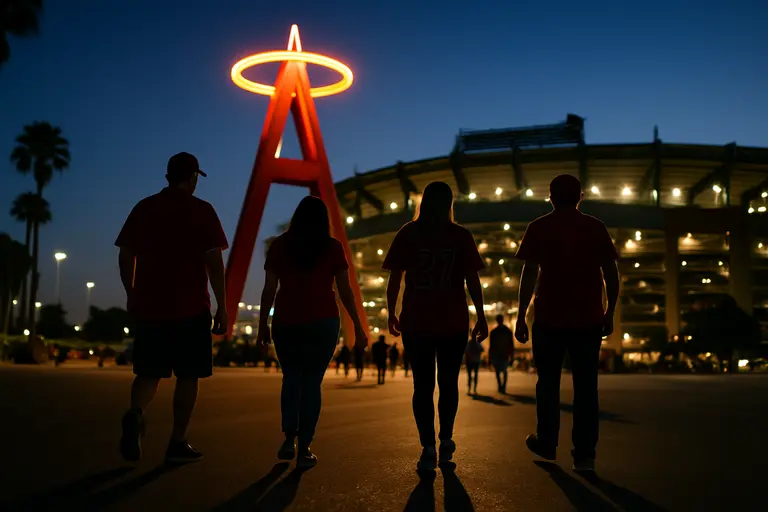
Angel Stadium remains one of the clearest local issues. The Angels’ lease is set to expire on December 31, 2032, with two extensions that could push it through 2038. The city of Anaheim owns the stadium and the surrounding land. That structure gives the city a direct stake in any future plan, especially because the land around the ballpark has long been part of the public debate over what the area should become.
Kroenke could prioritize redevelopment of roughly 130 acres of mostly idle parking lots around Angel Stadium into a mixed-use district with entertainment, retail, hotel, or residential pieces, according to the Los Angeles Times report. Any such plan would carry sports and civic stakes. For fans, it could affect pregame routines, traffic patterns, family gathering spots, and the way the ballpark connects to Anaheim before and after first pitch. For the city, it would raise land-use questions tied to public ownership, private investment, and long-term planning around a major venue.
The Name Debate Is Also A Local Signal
The team name remains a live identity issue in the research. Local officials have renewed interest in returning to “Anaheim Angels,” the name many fans still associate with the franchise’s strongest civic tie, rather than the current Los Angeles Angels branding. The research also indicates that a name change could become part of negotiations around land or development deals.
That point may sound cosmetic to some fans, but it is not small in Orange County. Names shape who feels represented. Anaheim has hosted the ballpark, owns the land, and carries the daily traffic and business effects tied to the club. Los Angeles branding reaches a larger media market, but it can blur the local bond that made the franchise distinct from the Dodgers. Because the Angels Sale links ownership, stadium planning, and civic identity at the same time, the name debate now sits closer to the center of the story.
What The Angels Sale Means For Anaheim Baseball
The Angels Sale has not fixed the roster, settled the stadium future, or answered whether the team’s public identity will shift back toward Anaheim. It has, however, changed the frame. Moreno’s tenure is moving toward a minority role after 23 years. Kroenke is in position to take control once MLB owners approve the deal. The team is valued at a record level, even after a long stretch without winning baseball.
For LA-area baseball fans, the next stage should be judged less by slogans and more by decisions. Does the baseball operation become clearer after closing? Does Trout’s remaining contract window get matched with a stronger roster plan? Do Anaheim officials and new ownership find a stadium path that serves game-day fans and the city’s long-term interests? Does the franchise lean into Orange County identity, Los Angeles market reach, or some balance of both?
Those are local sports questions as much as business questions. The Angels are not only a balance-sheet asset. They are a summer routine, a family ticket, a youth baseball reference point, and a civic marker for Anaheim. Kroenke’s purchase agreement placed all of that back on the table on September 1, 2026. What follows after approval will tell fans whether the deal becomes a true baseball reset or simply a change in the owner’s box.