

The Los Angeles Rams entered the 2026 NFL season with expectations of competing for a Super Bowl, but six weeks into the campaign, their position has changed dramatically. A heartbreaking 18–16 home loss to the Arizona Cardinals on Sunday, October 18, dropped Los Angeles to a 2–4 record and left the team in fourth place in the NFC West. The defeat also handed Arizona a head-to-head advantage in a division where every conference matchup could carry significant postseason consequences. As California football fans follow the Rams’ playoff outlook, broader developments in the state’s sports industry, including sports betting legisation updates in California, remain relevant to discussions about the intersection of professional sports, fan engagement, and state policy. The NFL’s official team coverage confirms the Rams’ standing after Week 6.
The latest setback exposed familiar problems involving offensive consistency, special-teams execution, penalties, and late-game decision-making. Head coach Sean McVay acknowledged the urgency after the game, emphasizing that Los Angeles must stop making costly mistakes if it expects to win consistently. With quarterback Matthew Stafford, wide receiver Puka Nacua, and a roster built around high expectations, the Rams still have talent capable of producing a turnaround. However, their margin for error is shrinking, and the next several games will help determine whether they can reenter the NFC playoff race.
A Late Collapse Against Arizona Leaves Los Angeles Searching for Answers
The Rams’ Week 6 defeat was particularly damaging because they appeared to have rescued the game in its final minute. Trailing 15–9, Los Angeles put together a late scoring drive that ended with Stafford connecting with tight end Colby Parkinson for a touchdown. Punter Ethan Evans then converted the extra point, giving the Rams a 16–15 advantage with only 47 seconds remaining.
That lead lasted less than a minute.
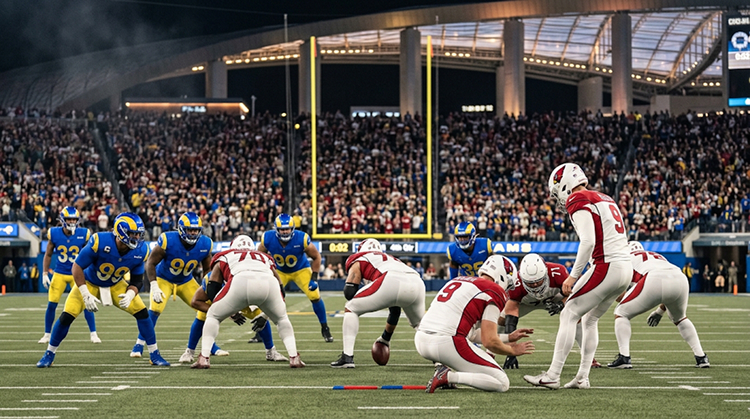
Arizona quarterback Jacoby Brissett completed a 21-yard pass to Ja’Corey Brissett on the Cardinals’ final possession. A subsequent unnecessary roughness penalty against Los Angeles helped move Arizona into field-goal range. Kicker Chad Ryland then delivered a 43-yard field goal as time expired, securing the 18–16 victory.
The result was more than a narrow divisional loss. It highlighted the Rams’ inability to close out a game after taking the lead, even when their defense had prevented Arizona from scoring a touchdown throughout the contest. According to the Rams’ official game recap, the decisive sequence followed an afternoon already complicated by a major special-teams injury.
Ryland finished the game with six successful field goals, providing all 18 of Arizona’s points. Los Angeles, meanwhile, was left to examine the mistakes that turned a potential home victory into another damaging result.
The defeat also followed a 37–34 overtime loss to the Buffalo Bills on October 12. Losing two consecutive games by narrow margins has increased the pressure on McVay and his coaching staff to improve execution in critical situations.
Matthew Stafford and the Offense Must Deliver More Consistently
Stafford’s individual production against Arizona offered some encouragement, but the overall offensive performance did not match the expectations surrounding Los Angeles.
The veteran quarterback completed 25 of 33 passes for 222 yards and two touchdowns. His late connection with Parkinson gave the Rams an opportunity to escape with a win, while his earlier scoring pass to running back Blake Corum helped Los Angeles take a second-quarter lead.
However, the Rams struggled to sustain enough offensive momentum to put the game beyond Arizona’s reach. The offense finished with 286 total yards, compared with 338 for the Cardinals, according to Reuters’ October 18 game report.
The difference matters because a team competing for a division title needs to convert productive possessions into touchdowns and maintain control when the defense is under pressure. Los Angeles had opportunities to establish a more comfortable advantage but instead remained vulnerable to a late Arizona scoring drive.
Nacua continued to provide an important receiving option, finishing with 80 receiving yards. His ability to create separation and generate yards after the catch remains central to the Rams’ passing attack. Stafford’s connection with Nacua, alongside the contributions of Parkinson and Corum, gives the offense several ways to produce explosive plays.
Yet the Rams need more than isolated scoring drives. They must reduce negative plays, avoid costly turnovers, and improve their efficiency on third downs and in the red zone. Those improvements would allow the team to turn competitive games into victories rather than relying on last-minute heroics.
The challenge is especially significant with the NFC West standings already working against Los Angeles. At 2–4, the Rams cannot afford to let offensive inconsistency continue through the middle portion of the schedule.
Special Teams Have Become a Major Concern
One of the most unusual aspects of the Cardinals game was how quickly a single injury disrupted Los Angeles’ plans. Newly signed kicker Blake Grupe made a 44-yard field goal in the first quarter, but injured his knee while attempting to tackle Arizona returner Devin Duvernay on the ensuing kickoff. He did not return.
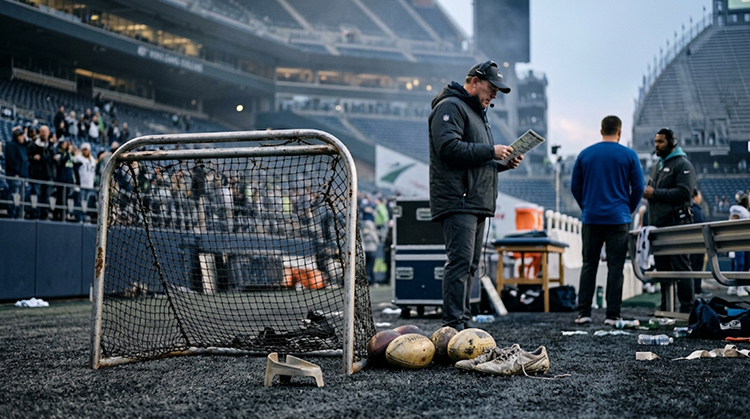
With Grupe unavailable, the Rams turned to Evans, their punter, to handle placekicks. Evans successfully converted the extra point following Parkinson’s late touchdown, but Los Angeles’ kicking situation left little room for error.
The absence of a healthy placekicker complicated the team’s decision-making. Rather than attempting conventional field goals in certain situations, the Rams had to weigh fourth-down attempts and other options with the game still within reach. The resulting decisions became an important part of the postgame discussion.
Arizona, by contrast, had a dependable specialist in Ryland. His six-for-six performance demonstrated how critical reliable kicking can be in a low-scoring game. The final 43-yard kick also illustrated the difference between a team that could execute its final scoring opportunity and one that could not protect a narrow lead.
The Rams’ special-teams concerns extend beyond a single afternoon. Personnel changes and injuries can affect any NFL roster, but teams with postseason ambitions must have contingency plans that allow them to remain competitive when unexpected problems arise.
Los Angeles now needs to evaluate Grupe’s recovery, its available kicking options, and the broader coordination of its special-teams unit. Those decisions could prove important in upcoming close games, particularly against NFC West opponents where the difference between winning and losing can determine playoff positioning.
Defensive Injuries Add Pressure to an Already Difficult Situation
The Rams’ defense had moments of effectiveness against Arizona, holding the Cardinals without a touchdown. However, preventing touchdowns was not enough to secure the victory, and injuries have made the unit’s outlook more complicated.
Cornerback Trent McDuffie missed the October 18 game because of a groin injury, according to Reuters’ pregame injury report. McDuffie had recorded one interception and seven passes defended across his first five starts of the season. His absence reduced the options available to the secondary against Brissett and Arizona’s receiving group.
The Rams also entered the matchup without edge rusher Myles Garrett, who was on injured reserve with a knee injury. Losing a disruptive pass rusher can change how a defense approaches opposing quarterbacks, particularly when the secondary is also dealing with personnel limitations.
Against Arizona, the defense generated important moments, including an interception by safety Quentin Lake in the first quarter. That takeaway helped Los Angeles establish an early scoring opportunity. Defensive lineman Aaron Donald also contributed pressure and a tackle for loss.
Still, the final possession exposed the consequences of a single penalty and a missed opportunity to prevent a decisive completion. Even a defense that limits touchdowns must finish possessions, protect late leads, and avoid extending opponents’ drives through unnecessary penalties.
McVay and defensive coordinator Nick Rallis’ counterparts across the division will be watching how Los Angeles responds. If key defenders return and the unit improves its situational execution, the Rams could become more difficult to beat. If injuries persist, the offense and special teams may need to carry a heavier burden.
The NFC West Playoff Race Leaves Little Room for Another Losing Streak
A 2–4 record after six games does not eliminate a team’s postseason chances, but it changes the path required to reach the playoffs. The Rams now need to improve their win percentage while keeping pace with divisional rivals.
The official NFL standings and team coverage list Los Angeles in fourth place in the NFC West following Week 6. Arizona also improved to 2–4 after the win, moving ahead of the Rams through the head-to-head result. That makes the loss particularly costly: it damaged Los Angeles’ overall record and gave a direct divisional competitor an advantage in their first meeting of the season.
The San Francisco 49ers, Seattle Seahawks, and Arizona Cardinals all represent important reference points as the division develops. Results elsewhere will affect the standings, but the Rams cannot depend on other teams losing to repair their own position.
Los Angeles also faces a schedule that will test its ability to respond quickly. Its next game is against the Las Vegas Raiders on Sunday, October 25, followed by a home matchup against the Los Angeles Chargers on November 1. The Rams then travel to face the Washington Commanders on November 8 before visiting the Cardinals on November 15, according to the official 2026 Rams schedule.
The upcoming Raiders game is an opportunity to stop the slide before the team enters another challenging stretch. The November 15 rematch with Arizona is especially relevant because a victory could help Los Angeles recover ground against a direct divisional rival. Until then, the Rams need to focus on improving their own performance rather than calculating every possible playoff scenario.
A sustained recovery would require a stronger run of results, healthier personnel, and more consistent execution. Another extended losing streak, on the other hand, would make the division title increasingly difficult to pursue and could force the team to concentrate on a wild-card route.
Sean McVay Faces an Important Test of Leadership
McVay’s ability to adjust the team’s approach will be central to Los Angeles’ recovery. His success with the Rams has been built on offensive creativity, detailed preparation, and an ability to adapt during difficult stretches. The current start places those strengths under scrutiny.
Following the Cardinals loss, McVay acknowledged that the team needed to stop undermining itself. His comments reflected frustration with offensive mistakes, negative plays, and the failure to capitalize on opportunities. The NFL’s October 19 report detailed his assessment of the defeat.
The immediate challenge is to translate that frustration into measurable improvements. The coaching staff must examine play selection in critical situations, establish more consistent offensive rhythm, and ensure that special-teams contingencies are ready before the next game.
Quarterback management will also attract attention. Stafford remains capable of producing accurate throws and decisive scoring drives, as his two touchdown passes against Arizona demonstrated. The more pressing question is whether the offense can maintain that level of production throughout four quarters. Better protection, efficient early-down play, and fewer costly mistakes would help reduce the pressure on Stafford late in games.
The defensive staff faces a parallel task. McDuffie’s availability, Garrett’s recovery, and the development of effective coverage and pass-rush combinations will influence how well Los Angeles handles the division’s other offenses.
The Rams do not need to overhaul every aspect of their approach after one disappointing stretch. They do, however, need to identify the problems that repeatedly turn competitive games into losses and address them before the season moves beyond their control.
Can the Rams Still Reach the Playoffs in 2026?
The Rams’ playoff prospects remain uncertain rather than settled. Six games into the season, a 2–4 record leaves them with substantial ground to recover, but the remaining schedule provides opportunities to improve their position.
The clearest route forward begins with winning the games they can control. Beating Las Vegas on October 25 would end the two-game losing streak and provide a more stable foundation for the following weeks. The Chargers matchup and the November return game against Arizona will offer further tests of the team’s ability to handle pressure.
Several indicators will help determine whether a genuine turnaround is underway. First, Stafford and the offense must produce more consistently instead of relying on late scoring drives. Second, the special-teams unit needs reliable kicking and fewer personnel disruptions. Third, the defense must capitalize on takeaways and finish crucial possessions without costly penalties.
The Rams also need better health across key positions. The return of important defensive players could improve the unit’s ability to limit explosive plays, while stability at kicker would simplify decisions in close games.
No single result will determine the entire season, but the next few weeks will reveal whether Los Angeles can convert its remaining talent into a consistent winning record. The NFC West race remains a demanding test, and the Rams have little room for another prolonged slump.
For California football fans, the central question is no longer whether the Rams have enough recognizable talent to compete. It is whether they can eliminate the errors that have undermined that talent. Sunday’s loss to Arizona showed how quickly a game can slip away when execution breaks down at the most important moment.
Los Angeles still has time to change the narrative. Doing so will require a more disciplined offense, dependable special teams, healthier defensive personnel, and better decisions under pressure. If those changes arrive quickly, the Rams can remain part of the playoff conversation. If the same problems persist, their early-season ambitions will become increasingly difficult to salvage.