

Purdy Samuel dynamics became one of the defining reference points for the San Francisco 49ers’ offense because the pairing linked Brock Purdy’s timing as a passer with Deebo Samuel’s ability to turn ordinary touches into chain-moving gains. As of September 10, 2026, this is no longer a preview of what might happen between them in Santa Clara. It is a retrospective look at how their connection shaped the 49ers, and how its absence after Samuel’s March 2025 move from San Francisco changed the way the offense had to distribute the ball.
For Bay Area fans, that distinction matters. The 49ers’ offense has never been judged only by box-score volume. It has been judged by rhythm, spacing, and whether the best players can keep the unit ahead of the sticks. Purdy and Samuel fit that local expectation in different ways: Purdy offered quick processing and accuracy, while Samuel brought the physical, yards-after-catch style that became tied to the team’s identity.
What Purdy Samuel Dynamics Changed
Purdy Samuel Dynamics In The Short Game
The best way to understand Purdy Samuel dynamics is to start with the type of stress Samuel created. He did not need every target to travel deep downfield to change a possession. The research notes list Samuel’s 2025 production with Washington at 99 targets, 72 receptions, 727 receiving yards, and five touchdowns, with a 10.1-yard average per catch, a target profile documented in this StatMuse target summary. Those numbers came after his San Francisco tenure, but they still describe the same core skill: high-touch usage with a strong chance to produce after the catch.
That skill mattered to Purdy because it gave the quarterback a built-in answer when defenses took away cleaner downfield throws. A short completion to Samuel could behave like a longer pass once he had space. For a quarterback who was often evaluated by efficiency, that was not a minor detail. It allowed the offense to create explosive outcomes without asking the quarterback to live on low-percentage throws.
How The Pairing Affected Spacing
Samuel’s presence also changed how the 49ers could present the field. The research notes show that, during the 2023-2024 span when Samuel was in the game across 28 games, Purdy totaled 7,215 passing yards, 46 passing touchdowns, 19 interceptions, and a 104.5 passer rating. That does not mean Samuel alone produced those totals; San Francisco had multiple high-end offensive pieces. But it does show the offense reached strong passing results when Samuel was part of the structure.
For local fans watching from Levi’s Stadium or on Bay Area broadcasts, the effect was visible in the way defenses had to respect motion, screens, slants, and backfield touches. Samuel’s role gave the offense a physical receiver who could blur the line between pass concept and run-game extension. That helped Purdy play with answers built into the formation rather than needing to solve every down after the snap.
The Numbers Behind The Shift
Purdy’s 2025 Efficiency After The Split
After Samuel left San Francisco in March 2025, Purdy still produced at a strong level in the documented portion of the 2025 regular season. Through nine games, he threw for 2,167 yards with 20 touchdowns and 10 interceptions, completed 69.4% of his 284 pass attempts, and posted a 100.5 passer rating, according to NFL career stats. He also rushed 33 times for 147 yards and three touchdowns in that span.
Those numbers point to a quarterback who remained productive, not one who collapsed without Samuel. That is an important distinction for a fair Bay Area reading of the offense. Purdy’s 2025 line showed accuracy, scoring output, and enough mobility to add value outside pure dropback passing. The loss of Samuel did not erase the offense’s ability to function.
Still, the research notes show a slight efficiency change. Purdy’s yards per attempt moved from 8.5 in 2024 to 7.6 in 2025, and his touchdown-to-interception balance was less clean in the nine-game 2025 sample. That shift fits the football logic of losing a receiver who could create hidden yardage after the catch. The quarterback could still complete passes, but the offense had to find those extra yards through other receivers, the tight end group, or the running back usage.
Where Deebo’s Touches Went
The post-Samuel structure also placed more responsibility on familiar names. The research notes identify George Kittle and Jauan Jennings as players who stepped into more prominent roles after Samuel’s departure, with Jennings producing 643 receiving yards in 2025, second on the team behind Christian McCaffrey’s 924. That redistribution is the natural cost of losing a player who handled manufactured touches, intermediate targets, and YAC chances.
For the 49ers, the issue was not only replacing receptions. It was replacing the kind of receptions. A Samuel target could be part receiver route, part run-game substitute, and part tone-setting physical play. When those touches moved elsewhere, the offense had to ask different players to win in different ways. Jennings could handle more receiver volume, Kittle could pressure the middle of the field, and McCaffrey could carry a major receiving load, but no single role matched Samuel’s full profile.
That is why Purdy Samuel dynamics still shape how the 49ers’ offense is judged. The pairing set a standard for how quickly the unit could turn a simple completion into a damaging play. Without it, efficiency had to be built through distribution rather than one singular catch-and-run threat.
The Bay Area Meaning Of The Separation
Why Local Identity Matters
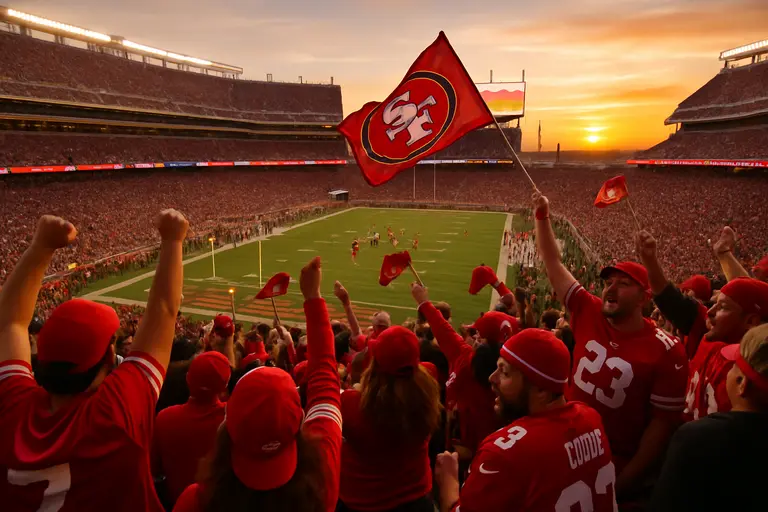
San Francisco football has long carried a particular expectation from its fan base: skill players should be tough, quarterbacks should be accurate, and the offense should feel connected rather than scattered. Purdy and Samuel fit that standard because their games complemented each other. Purdy did not need to overpower every window. Samuel did not need a perfect downfield throw to influence the scoreboard.
That connection also mattered beyond the pro locker room. Around the Bay Area, young players and families often watch the 49ers as a model for how varied offensive roles can lead to NFL value. Samuel showed that a receiver could win with strength, contact balance, and open-field vision. Purdy showed that timing and decision-making could keep an offense on schedule. Together, they offered a player-development lesson that resonated from youth fields to college programs: skill growth is not one-size-fits-all.
The 49ers’ challenge after the split was to keep that same teaching point alive through a different mix of players. A related local roster question is how new contributors can grow into defined jobs, an issue that also shows up in this site’s look at 49ers breakout players. Development is not only about finding the next star. It is about building enough dependable roles that the offense can absorb change.
What The Film Questions Became
Without Samuel, the film questions around Purdy changed. The quarterback still had to be accurate, but he also had to create value without as many built-in YAC shortcuts from one unique receiver. Defenses could treat the spacing differently when Samuel was no longer available as a motion threat, screen target, or contact-heavy receiver.
That does not make Purdy less capable. It makes the offensive test different. In the 2025 sample cited by the research notes, his average depth of target sat around 8.0 yards, while Samuel’s target depth profile was much shorter. That contrast helps explain why the pairing worked: Purdy could threaten enough of the field to keep the offense honest, while Samuel could punish soft space close to the line.
Why Purdy Samuel Dynamics Still Matter In Santa Clara
Purdy Samuel dynamics remain relevant because they explain both what the 49ers had and what they had to rebuild after March 2025. The offense did not lose only a receiver. It lost a specific type of connector: a player who linked quick-game passing, motion, physicality, and yards after catch into one role.
For Purdy, the next phase was about proving that his efficiency could travel beyond one personnel setup. The nine-game 2025 numbers showed he could still produce touchdowns and maintain a strong completion rate. The interception total and yards-per-attempt dip, though, showed the margin was slimmer without Samuel’s catch-and-run value.
For the Bay Area audience, the lesson is not nostalgia for one pairing. It is a sharper way to read the 49ers’ offense. If San Francisco creates easy touches, protects Purdy’s rhythm, and spreads YAC chances across several players, the offense can retain parts of what made the Purdy-Samuel years effective. If those touches become harder to find, the passing game asks more of Purdy snap after snap.
That is why Purdy Samuel dynamics still sit at the center of any serious 49ers offensive discussion. Their connection helped define a successful structure. Their separation forced San Francisco to show whether the structure was strong enough to keep producing without one of its most unusual pieces.