

Warriors Young Talent is no longer a side note in Golden State’s early 2026–27 story. It is part of the daily basketball question now: how does a franchise still tied to Stephen Curry and Draymond Green give enough room to younger players without treating the opening stretch like an experiment? From a Bay Area seat, that tension feels familiar. We have seen this team balance patience and pressure before, but the names around the veterans have changed.
Why Warriors Young Talent Matters Now
The Warriors’ youth push did not appear out of thin air. On May 15, 2026, Steve Kerr said the team needed “younger legs,” with Jonathan Kuminga, Moses Moody, Gui Santos and incoming rookie Yaxel Lendeborg among the younger players tied to that message. Kerr’s point carried weight because Golden State was not working from a blank roster sheet. During the 2025–26 season, the Warriors had an average age of 28.7, while Curry was 38 and Green was 36, with Jimmy Butler also part of the veteran group, according to Yahoo Sports.
The Veteran Clock Is Real
That veteran core still matters. Curry’s gravity changes how everyone else plays. Green’s reads still shape defensive possessions and half-court rhythm. Butler’s presence gives the roster another experienced pressure player. Yet every minute assigned to the older group comes with a hidden cost if the next group does not get tested in real NBA possessions.
That is why the early season has felt less like a clean handoff and more like a shared shift. The Warriors are not walking away from their established identity. They are asking younger players to carry more of the running, more of the loose-ball work, and more of the regular-season grind that can wear down a veteran roster by spring.
Kerr’s Younger Legs Message
On September 13, 2026, Kerr said the Warriors had tried to get younger during the offseason but noted how hard it can be to change roster age through free agency or trades. He also pointed to development “down the stretch,” which matters because development is not just a training-camp phrase. It has to show up in substitutions, late-quarter trust, and the tolerance for a missed rotation after a good decision three possessions earlier.
I think Bay Area fans understand that bargain better than they get credit for. The crowd can be impatient with sloppy basketball, but it also knows the difference between empty minutes and useful reps. The question is whether the coaching staff can keep the standard high while allowing the younger group to play through the parts of the game that cannot be learned from a bench seat.
The Opening Rotation Test
Golden State’s early rotation math has centered on Brandin Podziemski, Gui Santos and Lendeborg, with each expected to handle meaningful roles. Podziemski entered this season with increased expectations after a late 2025–26 scoring surge. Santos, at 24, has been framed as a slow-rising wing who needs consistent minutes. Lendeborg, selected with the No. 12 pick in the 2026 NBA Draft and 24 by the start of the season, arrived with a different label than many rookies: older, more physically ready, and viewed as someone who could help quickly.
Warriors Young Talent In The Rotation
For Golden State, Warriors Young Talent means more than age. It means whether Podziemski can handle a larger backcourt load next to Curry, whether Santos can defend wings without fading on offense, and whether Lendeborg can hold up as a forward who stretches lineups while still rebounding through contact. Early September rotation projections had Podziemski around 33 minutes per game, Curry around 32, Santos around 30, Lendeborg around 29 and Green around 25 in a 10-man setup. Those numbers were projections, not promises, but they showed the intent: the younger players were not being penciled in for spare minutes only.
Lendeborg gave the conversation a jolt in an October 2026 win over Denver. He posted 31 points, 12 rebounds and 6 assists in 31 minutes, a line that put him among the rare Warriors rookies since 2000 to reach at least 30 points and 10 rebounds in a game, per Yahoo Sports player grades. One game does not settle a rotation, but it can change the tone of practice, film review and fan expectation.
What Lendeborg Changes
Lendeborg’s age makes his rookie arc unusual. He is not being discussed as a distant project who needs two years before the staff can trust him. The Warriors selected him at No. 12 because his profile suggested immediate use, and the Denver performance gave the team a real example to work from. The next step is less glamorous: repeating the simple parts of the job when the box score is not loud.
That means running the floor, spacing with purpose, making the extra pass and staying connected defensively. For a team with Curry, the small choices around spacing matter because one step in the wrong place can turn a clean look into a crowded possession. For a team with Green, defensive communication is not optional. Young players either learn that language quickly or lose minutes to someone who does.
- Brandin Podziemski: expected to carry a major guard role after raising expectations late in 2025–26.
- Gui Santos: positioned as a wing who needs steady minutes to prove whether his rise can hold.
- Yaxel Lendeborg: drafted No. 12 in 2026 and already tied to forward minutes after a major early performance.
- Moses Moody and Jonathan Kuminga: part of the younger-player group Kerr referenced when discussing the need for more energy.
Chase Center Patience And Player Growth
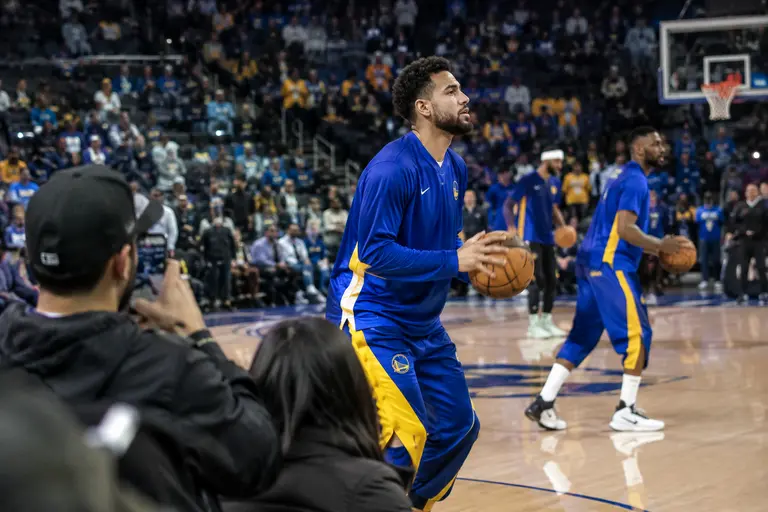
Warriors Young Talent is not just a front-office talking point; it changes the feel of the building and the rhythm of the fan experience. A veteran-heavy team asks fans to judge execution. A youth-infused team asks them to judge process, too. Was the shot rushed, or was it the right read? Was the foul careless, or did it come from the kind of physical defense the staff wants? Those questions can make a November possession feel more complicated than the scoreboard suggests.
This is where the Bay Area angle matters. Warriors fans are not watching a rebuild in the usual sense. They are watching a team with famous veterans try to stay competitive while building a second layer underneath. That is a narrow lane. Lean too hard on the older players and the season can become a fatigue test. Push too much responsibility onto the young group and the opening months can get uneven fast.
Podziemski And Santos Need Real Trust
Podziemski’s expected role is one of the clearest signs that Golden State wants a younger engine in regular rotation minutes. He is not being treated only as a change-of-pace guard. If the early projections are close to how the staff views him, he has to organize possessions, rebound from the guard spot and make quick decisions beside Curry or without him.
Santos faces a different test. Wings often get judged by what they do between the obvious plays. Can he hold defensive position? Can he keep the ball moving? Can he avoid disappearing when the offense flows through Curry, Butler or Green? The phrase “consistent minutes” sounds simple, but it can be the difference between a player pressing for highlights and a player settling into a role.
The Local Stakes Feel Different
From my view, this is the part that makes the story feel very San Francisco. The city has lived through banners, parades and the pressure that comes after them. Fans still expect quality basketball, but they also recognize the need to prepare for what comes after the oldest pillars step back. That does not mean lowering the bar. It means watching for signs that the next group can meet it.
For readers tracking the broader roster picture, our earlier look at Warriors roster changes fits with this same question: how much of Golden State’s 2026–27 plan is about immediate wins, and how much is about building a rotation that can survive the long schedule?
Warriors Young Talent And The Bay Area Mood
The opening stretch has not answered every question, but it has clarified the assignment. Golden State needs Curry, Green and Butler to remain high-value players. It also needs Podziemski, Santos, Lendeborg, Moody and Kuminga to make the season feel less dependent on veteran mileage. That balance is the story.
If Warriors Young Talent becomes a real strength, the Bay Area will feel it before the national conversation catches up. It will show in second units that stop bleeding points, in wings who finish defensive possessions, and in young players who earn closing-adjacent trust before the calendar gets heavy. That is the opening-season measure worth watching from San Francisco: not hype, not slogans, but whether the kids can make the veterans’ jobs lighter while keeping the Warriors’ standard intact.